With an emphasis on fabulism, magic realism, and genre bending
Author: laledavidson
My novel Blue Woman Burning was published by Emperor Books, an imprint of Red Penguin Books, in the fall of 2021: "In the cold descending breeze of the Altiplano between Chile and Bolivia, Fallon’s narcissistic mother bursts into flames before her family’s eyes. The inexplicable nature of their loss marks each family member in a different way."
Against the Grain, my latest novel, will be released on Earth Day 2022: “Against the Grain combines gorgeous poetry and romance with heart-stopping action, as the daughter of a rich CEO joins forces with a logger’s son to stop a huge lumber company from destroying an ancient redwood forest. The trees themselves become surprisingly powerful characters in this rich, multilayered novel. After reading Against the Grain, you’ll never look at a tree in the same way again,” says Matt Witten, bestselling author of The Necklace.
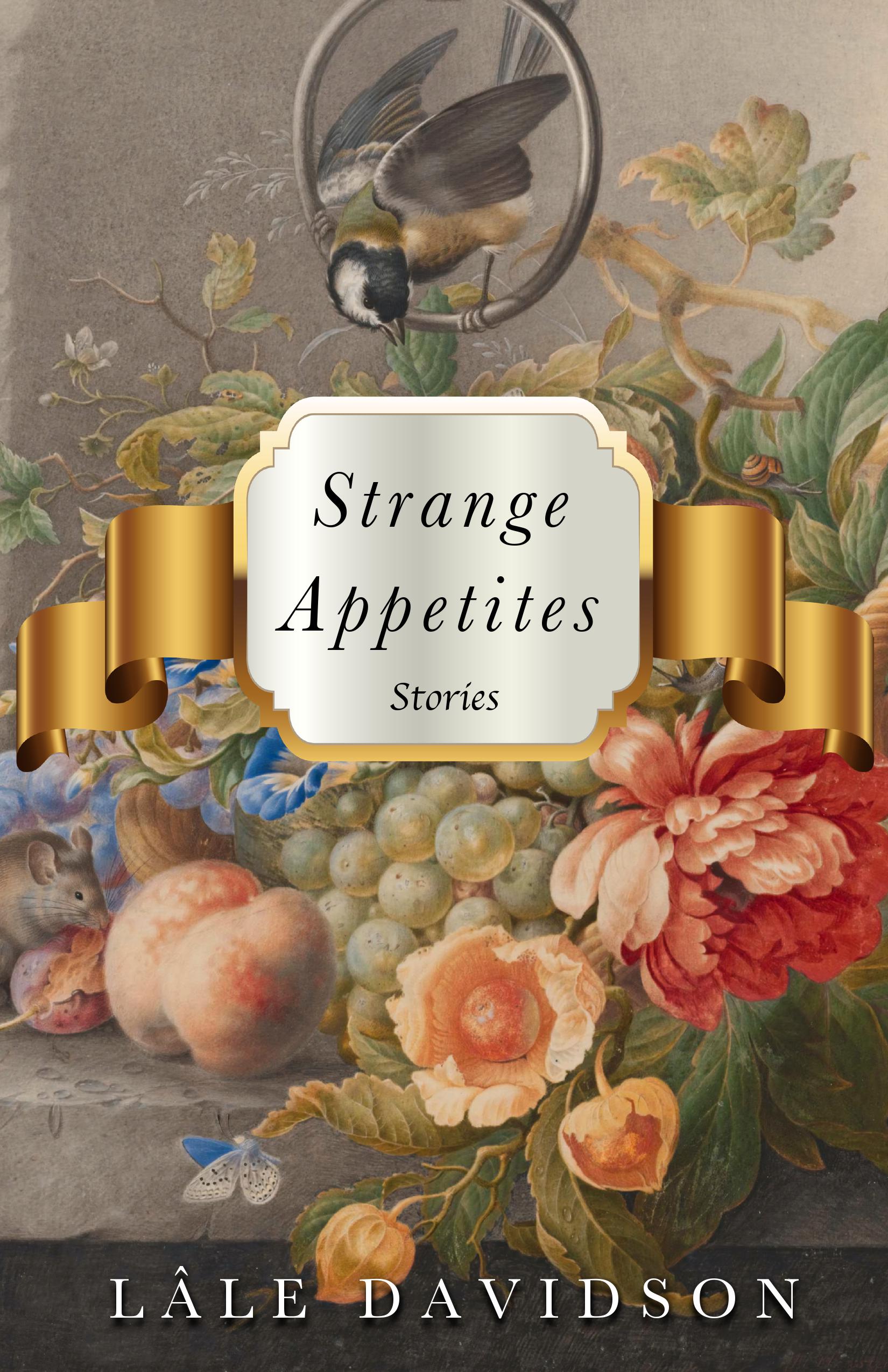
My book of short stories, Strange Appetites, won the Adirondack Center for Writing People's Choice Award.
I love all that is absurd, odd, and beautiful.
I finished the manuscript of Against the Grain. But it’s never finished. I’m still reading it aloud cover to cover, getting feedback, tightening things up. Here’s my third stab at the dreaded jacket copy. Let me know what you think in the comment section, please. Cover still under construction.
AGAINST THE GRAIN
Jacket Copy
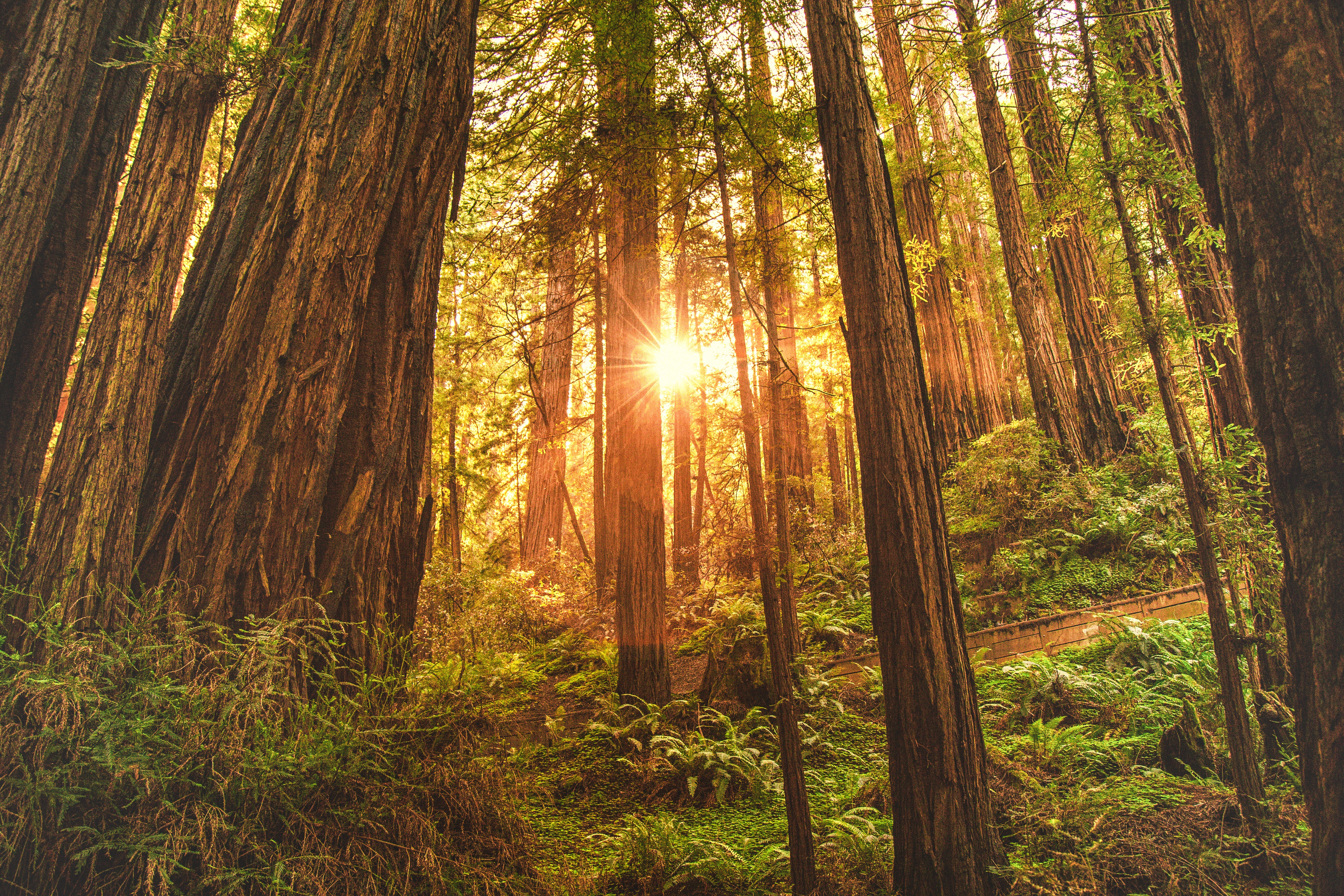
By the time they reached Logan’s tree, Diana had lost all sense of time and proportion. The sun hovered eight feet off the ground, a tiger’s eye shafting orange light between redwood giants. She was an insect suspended in amber as Logan clipped her into a harness. He was explaining how to climb, but amber suffused her ears, her throat, her mind as if the trees were talking to her.
Later, wrapped in a sleeping bag on a platform two hundred feet off the ground, they surveyed an ocean of luminescent mist pricked by treetops, saplings pushing into a new world. Her privileged world fell away like an empty husk. The only thing that mattered was this palm of earth offered to the sky. People didn’t have to choose between life in square houses and star-pierced infinity. They could have it all, an Eden, right here. All they had to do was choose.
But her father threatened it all.
Atlas Jamison, a Wall Street financier with a mysterious past, staged a hostile takeover of Pacific Lumber and tripled the cutting rate, reducing these ancient beings to lawn furniture.
Diana joins forces with Logan who believes Pacific Lumber killed his father, Zeff, the surfer-dude turned monkey-wrencher, and unstoppable indigenous lawyer for the trees, Jessica Wild, as they risk their lives to save the redwoods, the planet, and themselves.
Based in part on the true story of violent clashes in Northern California between corporate raiders, loggers, and activists during Redwood Summer 1990, Against the Grain is an action-packed Overstory and a mystical Damnation Spring.
Available in bookstores and Amazon by Earth Day.
The Truth Behind the Story
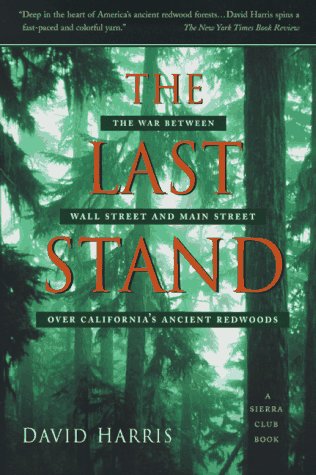
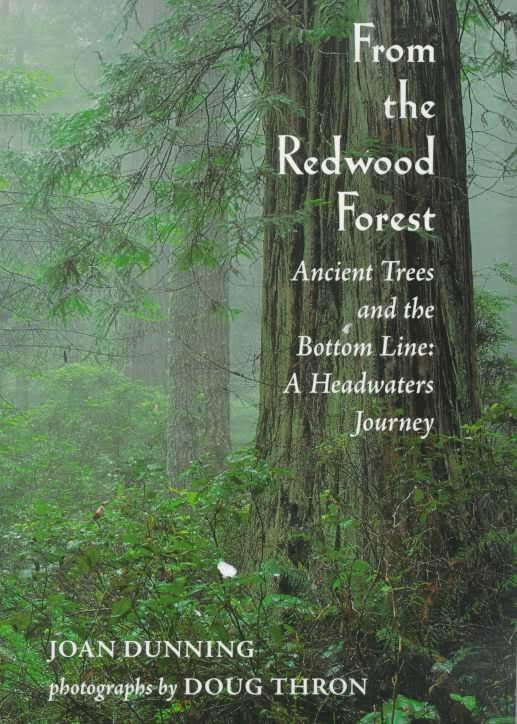
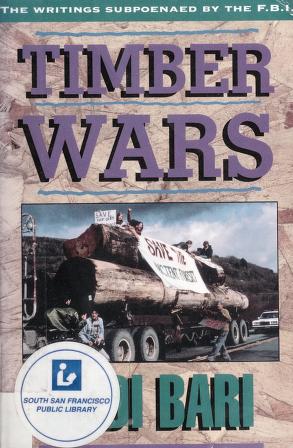
Here are just a few of the resources I relied on when researching the novel.
Red Penguin Books has a regular pod cast called “Between the Covers,” where they interview three Red Penguin authors. This episode featured Debbie De Louise, R.K. Mullins, and me.
Head Penguin Stephanie Larkin interviewed Debbie De Louise first. She introduced her books, Barking Up the Wrong Tree and Meows and Purrs. We talked about cats a little too long, lol, but who can resist? I refer to my third cat as my favorite serial killer and my husband’s catwife.She has recently left him for a younger man.
By minute 16, Stephanie began her interview of R.K. Mullins, so we switched over to America’s other favorite topic, serial killers…the human kind, not the cat kind, with Mullin’s book, A Sniper’s Kiss: Hate Takes a Bullet.
R.K. is a charming autodidact from Kentucky with no tolerance for rudeness. It makes one worry just a bit about why he writes about serial killers. I gathered from our talk and the title of the book that, the “victims” are the bad guys, or at least very rude. Someone mentioned it was like the Netflix series, Dexter, but he doesn’t like that series. We theorized a bit about why serial killers do what they do. My hypothesis: no mystery, just brain damage. We also talked about how responsible the mentally ill are for the hurt and damage they cause.
This lead us to my novel magical realist novel, by minute 32, Blue Woman Burning, about a family trying to recover from narcissistic parents. We also talked about my book of fabulist short stories, Strange Appetites, not to be confused with faboulousness, though if you find them so, I won’t be offended. After that, we talked about the difference between short stories and novels. Enjoy!
We all fantasize about our novel being made into a movie, don’t we? Now-a-days people make book trailers for the book itself. It’s an intimidating concept, unless you have unlimited funds and can hire people. Instead, I found a decent compromise using Tiktok. Tiktok’s algorithm isn’t great for literary writers, as far as I can tell, and the longer your video, the shorter its reach. Also, their editor is somewhat limiting. For instance, the slides can’t be re-ordered once you upload them, and there aren’t any smooth transition effects for changing the photos. It’s also time-consuming to order the blurbs using their timer function. But I love that you can use the music Tiktok has contracted with for free.
When I imagine Blue Woman Burning the movie, Pink Martini ‘s songs “Le Premier Bonheur du Jour” and “Que Sera, Sera” would be a major soundtrack theme. “When I was just a little girl, I asked my mother, what will I be….” is the perfect reference to the flawed relationship between Fallon and her disappearing mother. The unbalanced-carousel background music of Pink Martini’s version is a beautiful expression of that feeling of “unreality” you get when you’re being snowed by a narcissist parent.
If I could use Pink Martini’s music for free, I’d use the “Ken Burns” effect in Mac’s iMovie slide show application. My father took the pictures I used here in Chile way back when, and they feature the family members the main characters of my novel were partly based on. A few of the images are from Unsplash. Then I clicked on “effects” and selected “visual” and “water for that ripple over the top. And that’s all she wrote. For today.
Heck, here’s a link to my whole BWB spotify playlist. Enjoy!
To support local bookstores, order from the Northshire Bookstore in Saratoga Springs, NY. My book of magical realist short stories Strange Appetites is available now, and Blue Woman Burning will be available by December 9th, 2021.
The first, The Colony, totally works for me. Judging from the use of several clips of the same people, I’m guessing they actually filmed the clips? I don’t know. Maybe the subscription services come with a few clips of the same people.
Obviously, my trailer is a little less Hollywood suspense, and more about flavor and texture. It takes all kinds. I’m betting that it’s best to make your trailer match your book. Blue Woman Burning is a psychological page-turner, but not a thriller.
Davidson Family Photo, taken by my dad. Camping or picnicking somewhere in south America.
When you write about family, publishing your first book isn’t always the happy occasion you think it should be. My first novel Blue Woman Burning will be published by Red Penguin Books on November 23rd. Instead of excitement and joy, I’m riding a see-saw between dread and numbness. It has been SUCH a long and confusing journey with so many stops, starts, revisions, and reinventions. Though excellent work can be written in the thick of emotional turmoil, I had to grow a few decades to write mine. When I began it (34 years ago!), I was too stuck in its emotional backwaters to understand and complete it.
Discovering Direction
The novel started with a short story I wrote after I had been accepted to a graduate creative writing program at the University at Albany in 1988. It was about an 18-month family stay in Chile during my childhood. I wrote in a charming, humorous voice, which I later figured out was only to protect myself from pain caused by family dynamics. I used magical realism to externalize my perceptions.
I had no idea how to end the story because I was angry with the main character, Eustacia, based loosely on my mother. I didn’t know the main character angered me, though. It was so charming how she didn’t know how many children she had; how she accidentally packed a child into shipping container and blithely congratulated herself for her brilliance when it was discovered; how she named them all after her own body parts. When I discovered my anger, the ending came with an explosion.
Long story short, autobiographical material confused and distracted me. We really did drive from Santiago, Chile to Upstate New York in a Dodge Dart as the novel depicts. We really did get stuck in the altiplano, a high desert plateau. But that wasn’t what the book was about. It took me a long time to realize the novel was about me being trapped in a Bermuda triangle between my mother, my brother and myself. Yet, I wasn’t even the main character in the original version!
Huge revisions later, I cobbled together something presentable in 1999. I found an agent, and she sent it to all the best publishers. Somewhere in my basement lurks a copy of a very complimentary rejection from Grove Press.
She asked me to revise. There was clearly something wrong with it. I and my writing style had changed so much in those twelve years of writing the novel, that it felt like I had jammed two different bodies together. The bones just didn’t match up no matter how much I massaged the skin. I was sick of it, I had just had a baby, and I didn’t know how to fix it.
I needed a few more decades of growth to get past the emotional pain of the autobiographical material. That’s when I was able to ask myself the real question all writer need to ask to complete a novel: “What do my characters need?” Not, “What do I need?” The latter is a great question for therapy and for getting started. But it doesn’t end there.
So, many more revisions later—and I don’t mean mere edits, but rather, throwing out half a book and writing a new half, then throwing out half of that, and reorganizing and trying new points of views— Blue Woman Burning is both my first novel and my tenth novel, all rolled into one lifetime of learning. I also just learned it is the first book in a new imprint for Red Penguin Books. I’m honored.
And now? I want people to read it…and I don’t want people to read it. I want it to be wildly successful…and I also know that the chances of that are slim. I’ve been working hard to promote the hell out of it, but I still have a day job, the task is endless, and I have a secret fear that the publicity gods just don’t like me. Maybe I enjoy the secondary gains of obscurity too much: protection. Will obscurity continue to protect me? Probably.
Family Fallout…
I have warned my family about the autographical content. I was worried about my mother reading it, as I knew she would recognize herself and also the places where I fictionalized. There’s a death in the novel that I know would wound her. Sadly, at the age of 98, she doesn’t remember much. Yet, it is sadly fortunate that my novel is being released now: I can share my accomplishment with her, AND I know she won’t be able to read it.
Speaking of which, at her insistence and against my better judgement a few weeks ago, I agreed to read the prologue aloud to her. Not surprisingly, cherubic and charming narcissist that she is, she interrupted me twenty times to tell me how it really was, and how I should revise. I explained that the book was finished, and she told me she was trying to help me improve it. I said, for the first time in my life, “It doesn’t need improvement.” Though I had to take a restroom break, I marveled at how little the exchange hurt. Twenty years ago, it would have cut deeply and lastingly. Whew. Growth!
But there’s the rest of my family. I worry about that my two older sisters, who are not in the novel, will feel exposed by having the family in the public eye. I wonder do they feel bad about being left out entirely? Then there’s a fictional version of my younger brother. Will he mind how I characterized some of his surface attributes?
I am most worried about my older brother’s feelings. The character based on him, Ovid, is a major character in the novel. I have spoken with my brother about it, and he has graciously applauded my publication and told me not to worry about how the character is depicted. Still, will friends call and ask, “Did that really happen?”
I told him a writer can never capture a whole of a human being on paper (at least, I can’t). I’m also hugely aware of how unreliable memory is and how biased we all are. That is my defense. He is okay with me noting that he is bi-polar in real life. But I clearly took it to a more dramatic level in the novel. It made a better story. It was not wish fulfillment. A writer says to themselves, “What is the worst possible thing that could happen to this character?” and then they do it. I won’t spoil it for you.
Let me just end by observing that there is a huge danger to having a writer in the family. More books are more autobiographical than most authors let on. They expose family and friends even when cleverly disguised. There is also a huge danger in being the (published) writer in the family The writer dares to shape the family narrative how they see fit. The writer gets the last word. But do I?
So let me be clear, as the acknowledgment of Blue Woman Burning says, “Thanks also to my family of origin for adventures in distant lands, arguments and inspiration, and for your forbearance, as I borrow family stories and likenesses, and change them wildly” to make a better story. There will be some fallout, no doubt, but I will endeavor to embrace the learning that will follow.
Meanwhile, friends and family will be joining me at a launch party on December 9th in Saratoga Springs, NY, and expect I will feel the joy, then.
You can purchase a paperback or kindle version on AmazonHERE today, and an audible version should be available shortly.
Startling, lyrical, and tender, Strange Appetites shines a light on loneliness in magical and mythical ways. Reality is bent but beautiful in these intricately carved stories, and the author’s varietal, passionate and subtle tone shifts fall on the ear with astonishing rightness.
Red Penguin Books Editor
It has been rewarding and — yes—strange— to see my first book-length work go up for sale. I have been writing since the age of seven, 50 years! A spelling tutor was assigned to me in first grade because I had learned to read and write in Germany. There’s a story about macabre German readers circa 1969 in Strange Appetites. The tutor was trying to explain the concept of vowels, and I was totally confused. Finally, she said, “Why don’t you write a story?
The news that I could write a story was a thrilling revelation. I’d spent years listening to my mother read to us at night, and the idea that I could change the endings filled me with light. But the road to publication took me through many a labyrinth. Most of these stories were published online all over the country, and a hand bound version won the Adirondack Center for Writing’s People’s Choice Award in 2015.
Free Download of Audio Story, “The Opal Maker,” Winner
“The Opal Maker,” the first story in the collection, won the Wigleaf Top 50 Very Short Stories of 2015.
Three you might not expect on your first day of publication:
There have been several fittingly strange occurrences on the very last leg of this journey: like how Amazon autocorrects my name to LAKE, and then the book doesn’t show up. Algorithm killer right there. I haven’t been able to change that… so you have to search my last name and the title to get there.
Another amusing event was when my first search result placed my book next to a plastic yodeling pickle. Who knew such things existed. It was, again, fittingly strange. Sadly, that pickle is not in my book. Maybe next time!
With every twist of the journey, there’s something new to learn and/or buy. I’m trying to do more of the former and less of the latter. You know how everyone talks about being a bestseller? Turns out there’s a way to game the system on Amazon by picking the right categories. How which category is the most advantageous depends on who you have to beat in that category, how many sales a day that category makes, and something else… I started to space out after the seventh paragraph and the purchase icon.
The Northshire Bookstore is hosting a books signing for me on Thursday, December 9th from 5:30-6:30 and I’m planning a Book Launch Bash. Details TBA. Of course everyone I ever laid eyes on is invited.
Thank you for supporting me on this journey.
Processing…
Success! You're on the list.
Whoops! There was an error and we couldn't process your subscription. Please reload the page and try again.
Over the last few months, I’ve been exploring a variety of social media platforms to cultivate an audience for my upcoming book releases. I must have listened to the same podcasts as all the other writers (Creative Penn, The Bestseller Experiment) because there’s so much chatter out there, it’s hard to hear ourselves speak. We’ve all become slaves to whatever shifting algorithm these platforms use to determine who gets the views. So now, not only do we have to write, we have to master fifteen new apps. And often, to use an app, you have to master another one first. We have to become our own marketing mavens.
There’s a high likelihood we’ve been tricked into becoming human battery cells à la Matrix for the benefit of the social media CEOS and advertisers. Oh well.
Here’s what I’ve learned. My Tiktok following has stagnated at less than 200, and the number of likes and views seem to be inversely related to the time I spend making them. Tiktok likes humor, spectacle, self-branding, and imitation (via “dueting” and “stitching”). I know, right? I should write a glossary. Anyway, I can be humorous, but not wildly so, and being ADHD, I thrive on variety, so I’m not really suited to Tiktok. They say it’s four young people, anyway.
Also, Tiktok doesn’t foster the kind of literary audience I’m looking for with a few exceptions, like Panic_Kyle. Finally, I’m NOT going to do the literal song and dance routine required of Tiktok authors. I’ve got nothing against dancing. I just like to do it for fun, not for selling books.
In contrast, Twitter has a stronger literary community. In a few short weeks I’ve doubled my followers by seeking out like-minded authors. There’s a strong ethos in Twitter that if someone follows you, you follow them back. Replying to posts is as important to posting your own thoughts. I find my best twitter replies are instinctive– the ones I don’t think too hard about. It’s like trying to see the Northern Lights when they are visible in NY. They are so faint that if you look at the sky too hard to you don’t see them. You have to cultivate a fuzzy focus.
My Twitter follower number seems to hover at about 44% of the number of people I follow. I’ve gone from not understanding Twitter to looking forward to engaging with strangers about New Yorker articles. In fact, I almost look forward to checking my Twitter messages more than my text messages. Worrisome. Borg induction? Social dissolution? Hope not.
Nevertheless, I enjoy the video editing app on Tiktok. It provides a set of creative constraints, visual tools, and copyrighted sound clips. It has prompted to me to revise, edit, and shorten previously written works, just for the hell of it – which is a good thing.
So, last night, I took a poem from the previous post “November Bones” and, in the effort to fit it into a 60-second Tiktok with visuals and music, I “stripped it down to the bones,” a process I enjoy as much as earth does in the poem, now an “Ode to Death.” A similar thing occurred with my flash fiction, “Lilith Confesses.” I like how the app forces me to weigh each word individually. So, it might not get me views, and it might not sell any books, but it does something far more important. It stimulates curiosity and creativity. Algorithm be damned. See what you think. But don’t think too hard.
I was delighted to be invited to be on Vox Pop with Barbara Chepaitis and Ray Graf as we talked about the creative process. Had to tell myself as I watched the clock count down to the second we were on air– it’s just a conversation with a good friend. Only one f-up– when I said the title of Anne Lamott’s essay, “Shitty First Drafts.” Ironic that we can teach that in public college, but can’t say it on public radio. Almost gave them a heart attack because of the fines they would get. Luckily, they have a delay and were able to catch it and bleep it out! Exciting.
Barbara Chepaitis is author of 12 published novels, including her most recent The Aquarius Project, about a young woman who can wish people dead. She’ll be telling ghost stories with Whispering Bones this October, and is currently working with some Lithuanian folks on her screenplay, The Amber. She teaches performance and writing at the College of St. Rose.
My novel, Blue Woman Burning, a road-trip in search of family with lashings of the supernatural, will be published this November by Red Penguin Books. My short story collection Strange Appetites won the Adirondack Center for Writing’s People’s Choice Award and will be re-released soon! Oct 26! As you know, I am a Distinguished Professor of writing at SUNY Adirondack, and recipient of the Chancellor’s Award for Scholarship and Creative Activities.
Listen here, but not before you subscribe to my mailing list for a free digital copy of my collection of short stories, Strange Appetites. For more description, check out the books tab above.
Processing…
Success! You're on the list.
Whoops! There was an error and we couldn't process your subscription. Please reload the page and try again.
Now is the time
when earth cracks her skirt like a whip
and sends her dress up in flames

The place where she strips down to her bones
and dances fiercely with the stars

Where instead of bundling up against bitterness
she throws down her ashen cloak
and covers ground with softness
as air-akin as moth.

Where she turns her naked face
to the outer dark
seared by stars and eyes
of owls with sight so keen
no mouse is safe
in its warmest, most secret,
most carefully padded nest

Where all the labor of harvest comes to naught
and death flies on furred wings across
winter steal
to grinning, starry heights

Where she pauses to sing among bare barked trees
that glow brown as dove breasts,
and mauve as dusk,
“It has ended! It has ended!”

Then she rests, mute and hard, seemingly for eternity
before she has to put her shoulder back
to the sun-warmed, moss covered,
millstone of life.
Processing…
Success! You're on the list.
Whoops! There was an error and we couldn't process your subscription. Please reload the page and try again.






 A Writing Life: Lâle Davidson