
 With the Adirondack Balloon Festival around the corner, an excerpt from my magical realist novel, Fallon’s Truth, seems in order. The protagonist, Fallon, cannot reconcile her magical past in Chile with her banal present in New York City. In a sing-song voice, the past keeps retelling itself in her head at inopportune moments. In this flashback, Fallon is referred to as Sister, her older brother is Big and her younger brother is Little. Eustacia is Fallon’s mother and Walter is her father.
Things began to happen in Chile that could only happen in the land where the earth ends. One day, when Eustacia was supposed to be cooking a pot of beans and Big was supposed to be watering the lawn, they began talking about the Big Bang and black holes. As they talked, they salivated and gesticulated. They drifted away from their posts, down the tiny street on which they lived, and out onto La Avenida de Las Condes, with Sister worriedly following.
“Did you hear? Scientists picked up a hissing sound on their cosmic recorders. They thought it was pigeon droppings on their antennae at first. But do you know what it turned out to be?” Eustacia rhapsodized.
“Yes! I read the same article!” Big said. “In National Geographic.”
“It was the left over sound of the Big Bang!” they exclaimed in unison. Sister was puzzling over how they could possibly tell that this hiss came from the Big Bang, especially since it could so easily be mistaken for pigeon droppings, but Eustacia and Big were talking so ecstatically that they began to physically leave the ground.
Thinking quickly, Sister ran back into the house, rummaged through the utility drawer—such a mess—and grabbed a ball of hemp twine. By the time she caught up to them, they had drifted down the avenue, but were still hovering a foot from the ground, talking so fast that their breath was lifting them like hot air balloons.
She tied the string around their ankles, and just in time, too, because a surprise thermal swept them high into the air. The ball of twine spun so fast in the cage of her fingers that it burned her palms, but she hung on with all her might. Eustacia and Big were oblivious. Other children were out, flying their kites, and when they saw Sister with her magnificent kites, they flew theirs closer. Sister had reached the end of her proverbial rope and was leaning all her weight backward to keep Big and Eustacia from flying away when Little popped up behind to lend a hand.
“Look out!” he cried. He pulled his sweater sleeve down over his hand and wrapped the twine around his wrist, jerking it to the side. “The kids are going to cut the string.”
When Walter stepped off the bus that brought him home from work, this is how he found Sister and Little, flying Eustacia and Big high in the blue sky. They only became aware of his purple face when he reached over their heads, grabbed the twine, and began reeling Eustacia and Big Brother in, spluttering epithets.
“Walter, dear,” Eustacia said as soon as her feet touched the ground, “we were having such a lively conversation.”
“They could have been killed!” Walter raged, shaking his finger at Sister and Little. Sister began to cry in earnest now, and Little to blubber.
“It is all my fault,” Big said, stepping protectively in front of his younger siblings.
“What are you talking about?” Eustacia looked in puzzlement from Walter to the children and back again. “Why are you so angry?”
“I’m not angry!” Walter said, turning a deeper shade of purple.
“But you’re shouting.”
“I’m just trying to make myself heard!”
“Well,” Eustacia said as she drew herself up very tall and cold. “I never. Big, children. Let’s go. Father is in a most disgraceful state. There can be no good reason for such bad behavior.” Lifting her chin, she walked off with the children trailing behind her.
Walter immediately became apologetic.
But when they got back to the house, the kitchen was on fire and the lawn was drowning.

 I’d always wondered whether those pictures of prismatic nebulae swirling in stellar winds were real, yet this man had seen them with his own eye because a crippled man had helped him to.
 Yet I find writing in Anzia Yezeirska’s novel The Bread Givers refreshing. A Polish immigrant, she wrote this novel circa 1920, about a Jewish immigrant family. With the novel, she captures the Yiddish cadence and sentence structure. There is very little reflection, very little back-story. It’s all plot and dialogue. It reads quickly and pulls me convincingly into that world. And yet, Yezierska wasn’t considered a great writer until recently, and then by a discerning few.
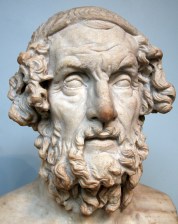 My mother says lack of reflection and explanation was something Plato hated about Homer. He criticized the Illiad and the Odyssey for being all action and no explanation or interpretation. I’m too lazy to read Plato and Homer to see if she is remembering correctly, but she should know: she’s a world literature scholar and is a walking encyclopedia.
 I was late to the GrubStreet Shop Talk Happy Hour, for which I had paid $75 to talk with an agent and editor. Dan Loedel, a lanky young man with a goatee and black-rimmed glasses, who works for Scribner, scooted over to the black window bench to make room for me. I introduced myself and tried my “pitch” on him: “After her mother spontaneously combusted on the Altiplano between Bolivia and Chile, Fallon struggles to make to grasp her identity and reality. Fifteen years later, her brother, who is bi-polar,” I could hear him sigh at this point, but I pressed on.
 As I dove into research for my sabbatical last year, I was confronted by two conflicting responses: 1) God, this article is hard to understand. I’ve gotten rusty; and, 2) This article is syntactically tortured and needlessly obtuse.
 As I’ve mentioned somewhere before, I balk at the typical kind of writing prompt, like “Write about a secret” or “Imagine you just won an award.”
 It happens more often than you care to admit. You type a computer document, save it, revise it, and save it again, then exit, only to return and find none of the changes are saved, or, more distressingly, that you are unable to find the document at all. You might have indulged a Where-the-fuck-is my-document-I know-I saved-it moment, or considered medication for Alzheimer’s. But before you go postal on Microsoft or commit yourself to the hospital for the typographically challenged, consider this.
 Writers need both support and criticism. Without support we wither, but without criticism, we run the risk of stagnating. While I’ve stated elsewhere (in Five Principles that Keep Me Writing) that I believe we only need to get out of our own way to achieve our best, I’ve also seen people who are unable to get out of their own way, staying on their own emotional surface and keeping their art there with them.

 A Writing Life: Lâle Davidson