
Author: laledavidson
My novel Blue Woman Burning was published by Emperor Books, an imprint of Red Penguin Books, in the fall of 2021: "In the cold descending breeze of the Altiplano between Chile and Bolivia, Fallon’s narcissistic mother bursts into flames before her family’s eyes. The inexplicable nature of their loss marks each family member in a different way."
Against the Grain, my latest novel, will be released on Earth Day 2022: “Against the Grain combines gorgeous poetry and romance with heart-stopping action, as the daughter of a rich CEO joins forces with a logger’s son to stop a huge lumber company from destroying an ancient redwood forest. The trees themselves become surprisingly powerful characters in this rich, multilayered novel. After reading Against the Grain, you’ll never look at a tree in the same way again,” says Matt Witten, bestselling author of The Necklace.
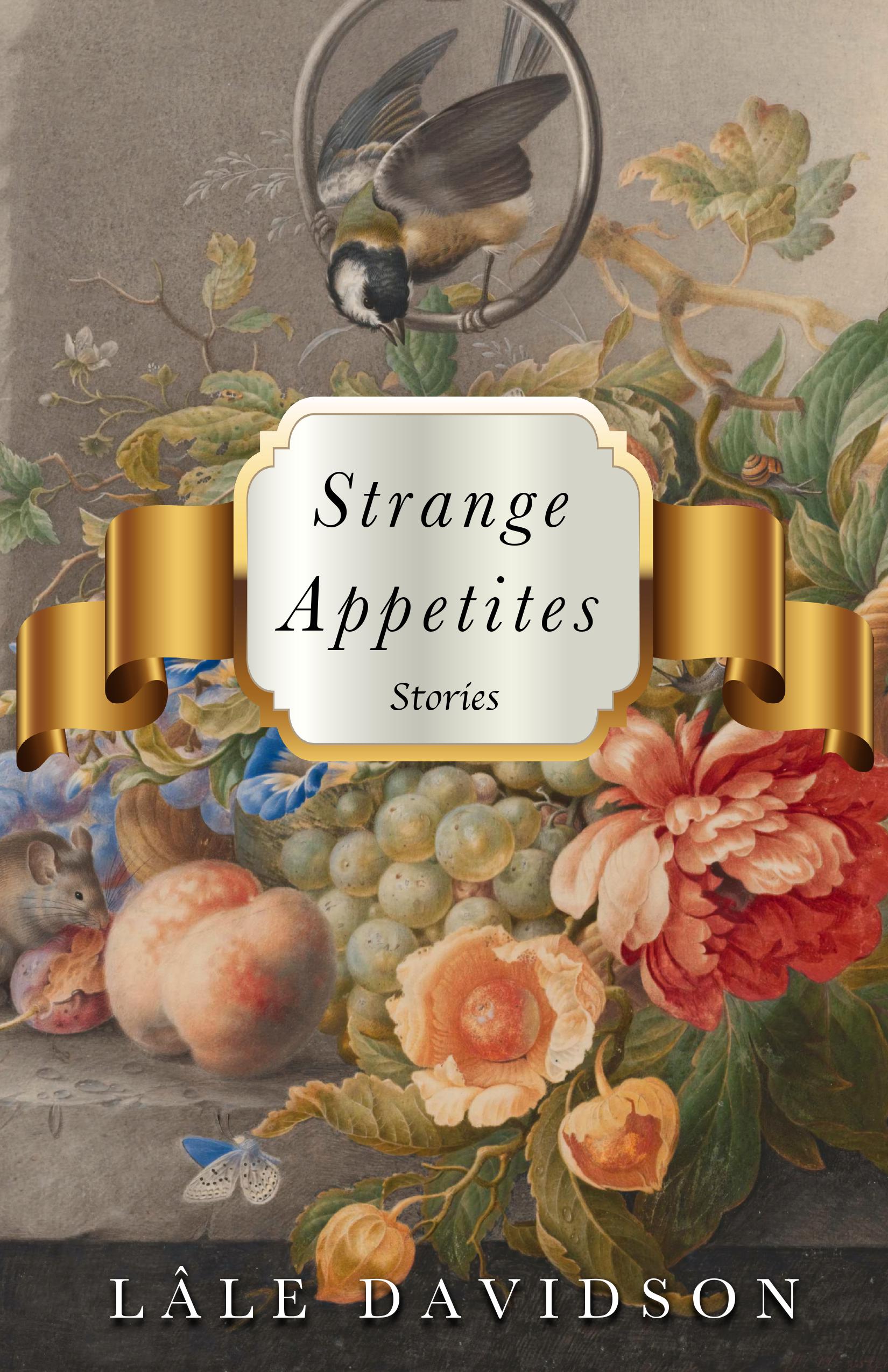
My book of short stories, Strange Appetites, won the Adirondack Center for Writing People's Choice Award.
I love all that is absurd, odd, and beautiful.
Reviews!
Beyond Sight Promotional Video
My grandmother lived with us until I was ten. When she passed away, I hoped and wished to see her in spirit form. For me, the thought of ghosts was both comforting and delightfully scary. Since then, I’ve consumed all kinds of ghost stories, my favorite being Flannigan’s series. My brother says ghost stories are like Christmas for morbid people. Okay. Guilty as charged. But it is with special delight that I bring to you Beyond Sight, my foray into a genre that occupies a rich place in my heart. It will be available everywhere books are sold on October 5. Hope you enjoy. Please leave a review on Amazon, GoodReads, and Barnes and Noble if you do. I had a lot of fun playing around in Canva for this video.
Authors kick off National Banned Book Week with library readings

GLENS FALLS — Book banning is wrong whether it comes from the left or the right.
That is the message conveyed by Barbara Lombardo, a journalism professor and retired Saratogian editor, during an event Monday evening at Crandall Public Library to kick off National Banned Book Week called “Defending the Freedom to Read and Write.”
Chance Design: Frost Reframed
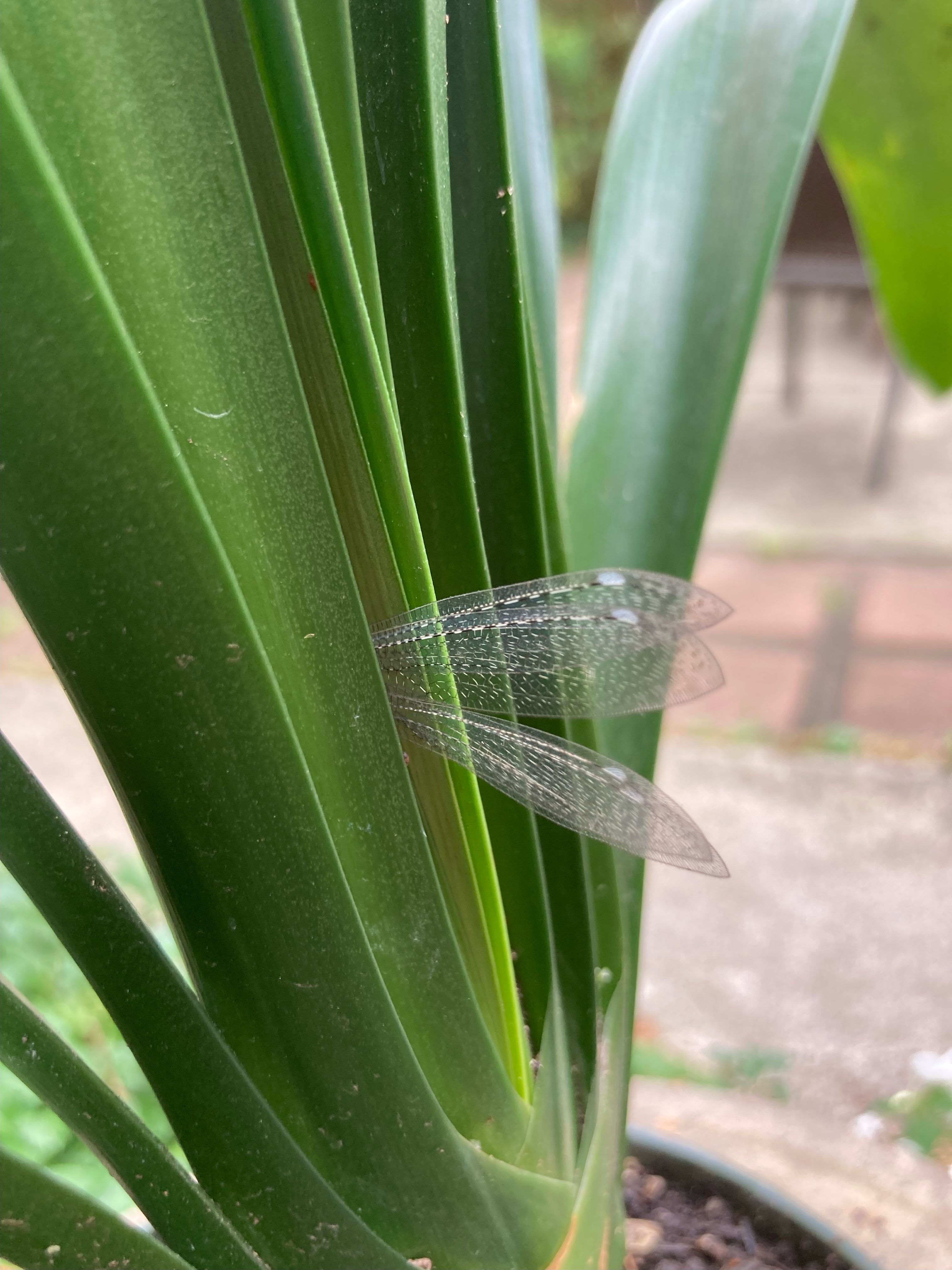
This morning I found this deceased dragonfly tucked away in this clivia, and I’m reminded of the poem “Design” by Robert Frost.
I found a dimpled spider, fat and white,
On a white heal-all, holding up a moth
Like a white piece of rigid satin cloth--
Assorted characters of death and blight
Mixed ready to begin the morning right,
Like the ingredients of a witches' broth--
A snow-drop spider, a flower like a froth,
And dead wings carried like a paper kite.

What had that flower to do with being white,
The wayside blue and innocent heal-all?
What brought the kindred spider to that height,
Then steered the white moth thither in the night?
What but design of darkness to appall?--
If design govern in a thing so small.
As I reread the second to last line of the Frost poem, I wonder why he thinks that the possibility of design that governs things so small is “dark” and “appalling”? I would think in his time, he’d think it was divine.
However, I’m not a proponent of the religious concept of intelligent design. Rather, I think that the earth’s stunning atmosphere and life forms came about by cells mindlessly dividing and multiplying over and over and over, failing constantly, until different things succeed. I think all this beauty and design is the result of infinite attempts at life– the result of chance– which eventually develops patterns that create life. Therefore, I don’t see chance and chaos as the enemy of order (as many seem to think — and as is often proposed in wonderful works of fiction like Gaiman’s The Sandman, as I discuss in my post, The Sandman: Allegory and Anthropocentrism. Rather, it’s chance and chaos are the zing of life– the thing that causes new life, new orders.
So, I’d like to substitute the words:
What brought the kindred dragonfly to this scene
then steered it into matching wings of green?
What but chance sublime,
If chance result in a thing so designed?
The Sandman, Allegory and Anthropocentrism
Just gotta dork out on how much I love the allegorical underpinnings of Gaiman’s The Sandman on Netflix. I didn’t read the comic books, because I don’t like the art and find the need to constantly choose between image and words distracting (perhaps it just takes practice).
Is Fiction the Center of the Universe?
I’m seeing The Sandman as a debate over the place of fiction (or dreams) in the scheme of things, an argument that dreams (fiction) are central to our life. In the horrifying episode 5 “24/7”, when people lose the ability to lie, they also lose the ability to hope or dream, and in they end up mutilating themselves and each other. It was a disturbing episode, but I find the idea that writing fiction REALLY MATTERS gratifying. Being a fiction writer, though, I’m wary of the potential narcism in that assertion-particularly coming from a writer. In later episodes, it’s basically implied that if humans stop dreaming, the universe will end.
Are Humans the Center of the Universe?

There’s a definite hierarchy in this series, and a message about the relationship between the entities that form the center of the narrative. They aren’t quite gods, and they are not extensions of humans– though they seem to have the purpose of serving humans, as Death, sister to Dream (otherwise known as Morpheus), tells him in episode 6. Morpheus tells Corinthian the same thing in episode 10. I tend to disagree with this anthropocentric assertion. I think the universe is just not that into us (to revamp a phrase from the self help- dating manual by Greg Behrendt He’s Just Not that Into You (2004)).
If these beings are the extensions of humankind, it makes sense. However, I don’t agree that the fate of the universe centers around humankind, as it does in this series (as ego-gratifying as that idea may be), and I would beg to differ with Gaiman on that score. But I will leave that alone for a second.
Is Desire the Antithesis of Dream?
Desire is the twin of Despair in the series, and is definitely one of the antagonists and enemy to Dream. I do worry about the choice to make Desire some sort of trans being… though I couldn’t say whether he’s a trans man or a trans woman. I just worry about our culture’s use of LGBTQ+ as bad guys. But I’m also intrigued by the attempt to differentiate between desire and dream. Certainly capitalism seems an example of desire run amok.
Another interesting assertion is made when the Vortex is prophesied to be the end of Dream. She is born out of an anomaly caused by the humans trying to capture death and accidentally getting dream instead, suggesting that when we try to evade the normal process of life, we make trouble. The implication is that chaos and disorder is the enemy of life and order. I disagree with this contention, also.
Even though I disagree with some of the assertions, I enjoy that this series started the conversation. I’m loving how Gaiman explores these concepts allegorically. I enjoyed how the visuals (except for the tacky vortex crystal heart), which are wonderfully evocative of comic book angles, and I loved how Morpheus needs to and does.
The Magical Story of a Book Cover Design

One of the joys of writing is how it connects you to other people. The discussions we have in my writing group are deep, thoughtful, and caring. My publisher, Stephanie Larkin, of Emperor Books is a constant source of encouragement and energy.
However, figuring out how to design and promote the book has been less fun. It requires a lot of cold-calling and asking for attention, which can feel shameful.
One unexpected joy of publishing came with the cover design of Against the Grain.
I had to reach out to people who live or lived in Northern California to find images, and I ended up having warm exchanges where they introduced me to other people.
That was how I happened upon Brian Maebius, who designed the cover for the hardcover version above. I’ll tell you later how I nearly drove Stephanie crazy with our paperback cover design, which is also beautiful. I offered to pay Brian, but he refused. Such is the devotion redwoods inspire. And such are the people who love them.
It was a community that connected like the mycorrhizae connect the trees underground. It’s hard to explain how much this means to me, especially as our country seems to be coming apart at the seams. Here, in his own words is why he did it.

Brian Maebius
“I attended a graduate program in Scientific Illustration at UC Santa Cruz in 2000-01 (The program is now part of CSU Monterey Bay. My wife and I rented a small cabin surrounded by redwoods in Lompico, near Felton, CA, a short drive to Santa Cruz campus. It was such a neat experience with the misty fog, salamanders, banana slugs, trillium, ferns and towering trees. We had to climb 150 stairs up the hillside from our parking spot near the creek to get to the cabin. I’m always happy to contribute to any author/artist that promotes conservation of such a unique ecosystem like the coastal redwoods.

We have a related tree in the Texas Hill Country. The bald cypress (Taxodium distichum) is closely related to Montezuma cypress in Mexico. It grows along the rivers and creeks around Dripping Springs. Some are 800 years or older. I’ve planted quite a few in the grotto and along the creek on our property. They’re not quite as tall as coastal redwoods, but they should reach 120 feet one day! Another fascinating and related tree is the Dawn redwood, Metasequoia, rediscovered in China in the 1940s, and previously known from Cretaceous fossil record.”
Once again, thank you, Brian.
Review of Strange Appetites
Somewhere in the depths of winter, this review emerged. Thank you, Benjamin Lerner and Saratoga Living. I would have thanked you earlier, but I am just learning about it. Love the line, the “metaphors that underlie Davidson’s work serve as powerful catalysts for personal growth and reflection, prompting her readers to dive inward as they ponder the true meaning of intimacy and transcendence.”

Strange Appetites: Letter from Mentor

Nearly 30 years after I earned my doctorate in creative writing and pedagogy, I sent my published books to one of my mentors from graduate school, Eugene Garber (University at Albany).
It’s hard to convey how much this means to me without relating how stormy my relationship to writing has been. But in the interests of brevity, I’ll simply share the letter/review.
Lale,
The books have arrived. I have read Strange Appetites with great admiration. I enjoyed all the stories. “The Opal Maker,” though it depends on a kind of conceptual trick, moves into some fine mother/daughter exploration. The sister in the labyrinth is a skit. Here I think the humor wins the day. The retelling of Daphne and Apollo is a stunning account in short of the slow loss of humanity. “Calling Down the Mountain” is a masterful moving story of our bafflement in the face of loss and indeterminacy, his incompleteness now ours, or always was ours. “World’s End” reminds us that throughout, even in its darkest moments, the writer looks for hope, not some sentimental approximation of hope, but real hope at the bottom of the well.
But for all of the excellence of the foregoing stories, “The Spiral Staircase” is of a different order, truly a lapidary masterpiece. Even as I began it, the story sent me off on associative journeys–Borges “Library of Babel,” Bartok’s Bluebeard’s Castle. And then the story brought me back to its own intention, which I believe to be an intensely lyrical exploration of presence and absence, in this case not only psychological but also metaphysical. Marvelous.
You are looking for a broader audience of intelligent readers. Of course, but I would hope that I could see more stories, even one more story, with the stylistic perfection and the philosophical resonance of the staircase.
I look forward to Blue Woman Burning, but I’ve got some obligatory reading ahead of it. OK, I remember with shame that workshop session, a dark blemish on an otherwise reasonably benign pedagogical history. That you have made it into a novel is at least partial redemption, even if undeserved.
Stay in touch. Keep writing. Who knew you were so close. Maybe some summer day, if Old Mortality stays his fell hand here a while longer, we might have lunch here or up there. It would be a pleasure.
Gene
Quest for the Holy Grail of Jacket Copy
The feedback on my jacket copy from my last post was mixed, with some saying I wasn’t getting at the core of the conflict. I was following the advice of The Manuscript Doctors, trying to show the poetry of the book. So, after reading many more examples, including Amore Towles’s The Lincoln Highway and South Pole Station, I determined that the key structure seemed to be character goal followed by obstacle. So here’s another crack at it. Let me know what you think in the comments, below. I’m open to constructive criticism.
Two-thousand-year-old redwoods used to cloak the California coast like bear fur. When Logan was a child and slept high in the branches of his favorite five-hundred-year-old redwood, Uuma, he used to hear her speak. For years, he and his father fought to save the few ancient trees that remain, and his father died in the attempt. Now Logan can’t hear the trees anymore.
To make matters worse, billionaire Atlas Jamison stages a hostile takeover of Pacific Lumber and triples the cutting rate, reducing the largest and most ancient trees to lawn furniture with heart-stopping speed.
Tree lovers from all over the world are resorting to ever more desperate measures to save trees and planet, but Jamison seems unstoppable, until his daughter shows up.
Can Logan overcome his grief and rage to teach Diana to hear the voices of the trees – and stop her father’s destruction?
Against the Grain is based on the true story of violent clashes in Northern California between corporate raiders, loggers, and activists during Redwood Summer 1990. Action-packed yet mystical, it asks what it will take to wake humans up – violence, loss, or love?
Also– which cover do you like better? Assuming some other more painterly affect on the left.


 A Writing Life: Lâle Davidson