With an emphasis on fabulism, magic realism, and genre bending
Author: laledavidson
My novel Blue Woman Burning was published by Emperor Books, an imprint of Red Penguin Books, in the fall of 2021: "In the cold descending breeze of the Altiplano between Chile and Bolivia, Fallon’s narcissistic mother bursts into flames before her family’s eyes. The inexplicable nature of their loss marks each family member in a different way."
Against the Grain, my latest novel, will be released on Earth Day 2022: “Against the Grain combines gorgeous poetry and romance with heart-stopping action, as the daughter of a rich CEO joins forces with a logger’s son to stop a huge lumber company from destroying an ancient redwood forest. The trees themselves become surprisingly powerful characters in this rich, multilayered novel. After reading Against the Grain, you’ll never look at a tree in the same way again,” says Matt Witten, bestselling author of The Necklace.
My book of short stories, Strange Appetites, won the Adirondack Center for Writing People's Choice Award.
I love all that is absurd, odd, and beautiful.
Most novice writers, when describing their characters, mention only hair and eye color and figure they’re done. However, hair and eye color are the least telling aspects of a person. You don’t have to tell us a lot about how your character looks, but give us some physical details that set them apart from other people and somehow symbolize their character, such as a wide mouth for someone who is expressive and has lavish appetites, or a Roman nose for someone who has that certain gravitas.What we mean by significant detail, is detail that does double duty, that tells us how a person looks as well as how they feel or behave, what kind of personality they have. The length of their eyelashes or color their hat is irrelevant when they are setting by a hospital bed watching their mother die of cancer. However, their bitten fingernails or dark circles under their eyes are significant.
A good way to develop your ability to describe people is to practice. I’ve composed a series of faces, paired only by similarity of hair and eye color to show you how DIFFERENT people of the same hair and eye color look.
Directions: Spend 60 seconds per slide. Quickly write down what distinguishes one face from the other by describing one or both faces using concrete detail about the shape and composition of face and features. Think about the spacing of the nose or eyebrows, or about the shape of the chin or forehead. Do NOT use judgement words (such as pretty, handsome, ugly, mean) or make assessments about personality. Simply describe what you SEE. This can be hard, at first. Try one or two slides with your writing group or in class. Compare notes, then continue. If you get stuck, try some of the metaphors from the sites below.
500 Ways to Describe Faces: While I don’t hold with everything said on this site, it has some great ideas in the first three sections for face shape, colors and animal metaphors. For this exercise, avoid the opinion adjectives like (“frank” or “cheerful”). This is not a permanent ban, just a temporary one until you get a handle on really seeing and describing the physical.
Don’t stop practicing here. Keep a notebook with you or use your phone note taker, and when you’re standing in line at the store or sitting in a coffee shop, do some people watching and try to jot down one or two significant and distinguishing physical traits of the people in front of you. If you find you are always describing chins and noses, force yourself to notice different traits like forearms and feet.
Happy writing!
Processing…
Success! You're on the list.
Whoops! There was an error and we couldn't process your subscription. Please reload the page and try again.
Here’s another true story that forms the basis of my magical realist novel, Blue Woman Burning, recently picked up by Red Penguin for publication this fall!
Reality was always being tested by my adventurous English professor parents, who couldn’t be accused of abusing us, with the globe-trotting upbringing they provided, but who might be accused of lacking empathy (My father is pictured to the right).
In 1975, our mother put me and my two brothers on a 24-hour plane ride to Santiago, Chile (just three years after a bloody military coup) alone, where my father met us with friends, Maria Ester (far left) and Rene. That’s me and my older brother in the center, and just the head of my younger brother at the door’s edge.
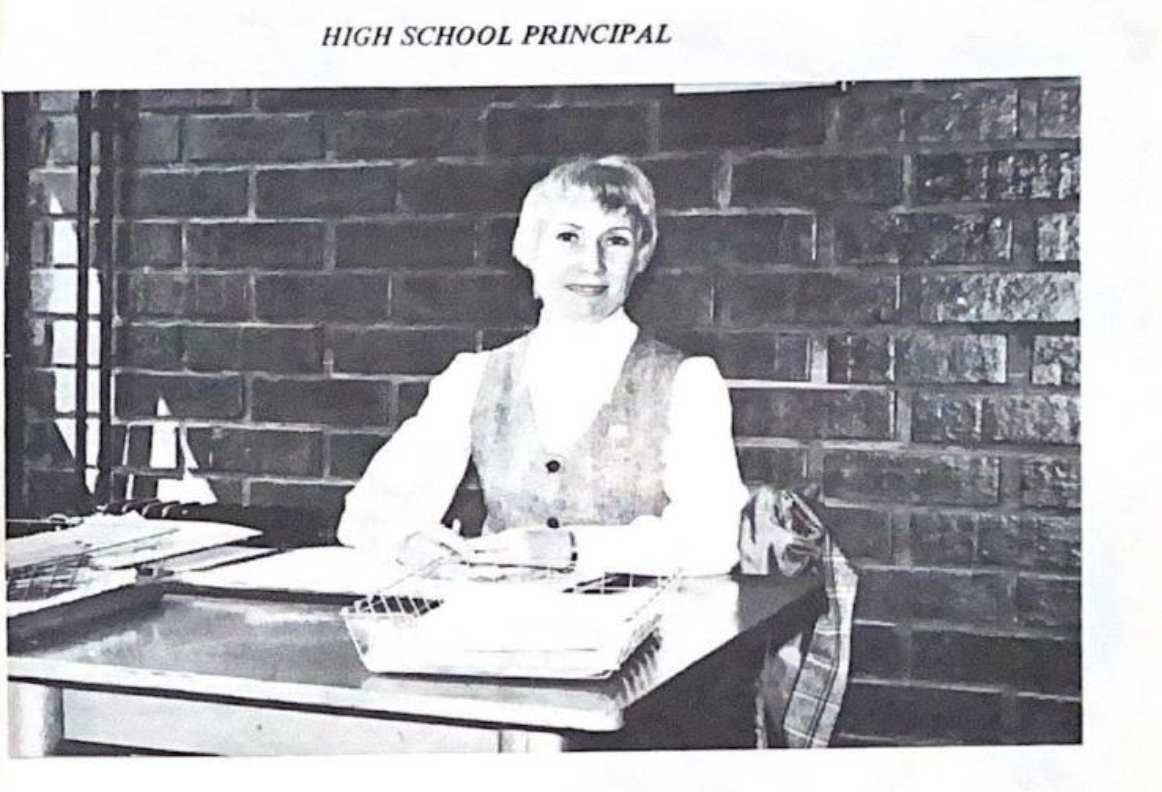
My father brought us that same afternoon to meet the principle of Nido de Aguilas (Nest of the Eagles), Mrs. Grover, (looking somewhat like Mrs. Partridge!), in the hills of Lo Barnechea, where we enrolled in that international School.
Finally, my father brought us to our new home in a modern, concrete development off Las Condes, Golfo De Darien, where Maria Ester taught us how to say, “Stop, please,” in Spanish and how to ride the public bus.
It was a beautiful house, unlike anything I’d ever seen, with a garden and patio at the center, red tiled floors which I later had to learn to wax, and sliding glass doors on every bedroom, opening to the little back yard. It was the first time I had my own room.
The very next morning, I donned my brand new national public school uniform (still creased from the suitcase), posed next to the lemon tree in the backyard, and smiled way more bravely than I felt at age 11…
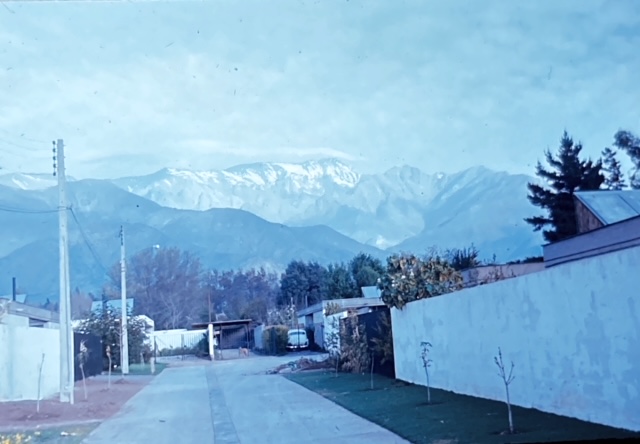
Our father sent us off (again, alone, are you seeing a theme here?) to the bus stop on Las Condes to catch the public bus to school while he caught the bus in the opposite direction to the Universidad Catolica. Those are the snow-capped Andes in the distance, home to the Incas. This picture is from some time later, when we realized no one wore uniforms at Nido– or maybe we are going off to fly kites with the local kids.
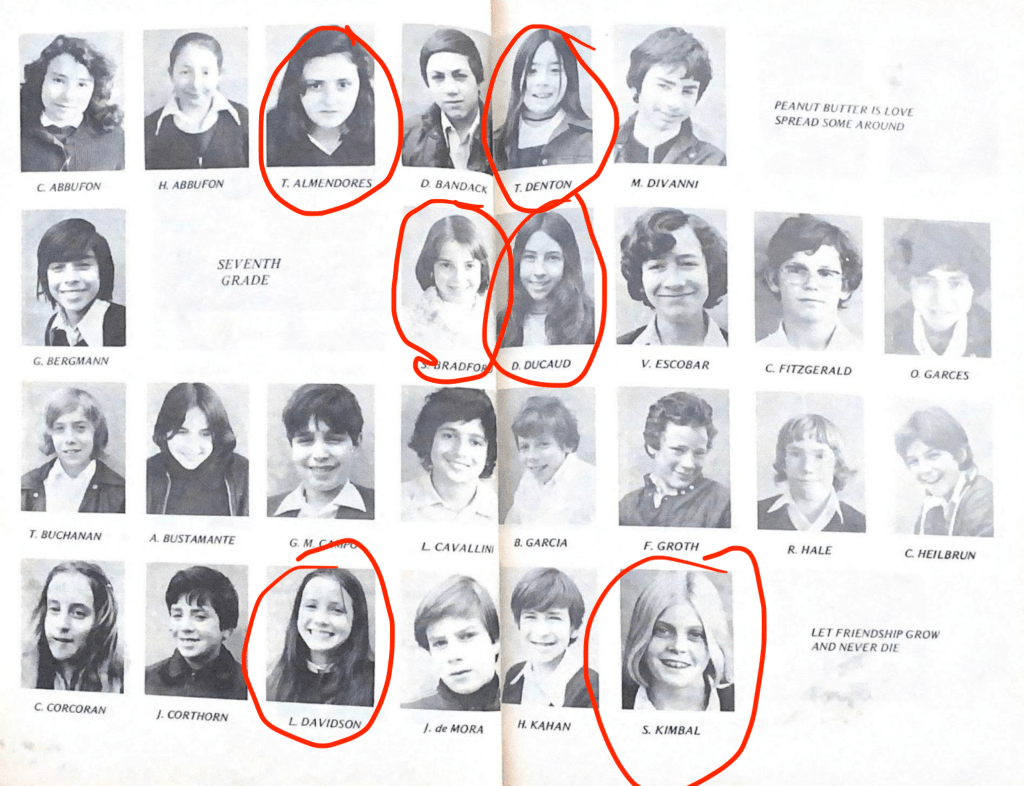
Surviving the usual heckling and name calling that comes with being the perennial new kid, as we so often were, I eventually made friends. Hope to reconnect some day.
Most definitions of magic realism ascribe it solely to South America, and with this kind of daily scenery, it’s easy to see why a worldview might be tinged with magic. However, I think it’s spawned by the culture clash of the Spanish Catholic invaders and the indigenous people and by tyranny and political upheaval. You find similar surrealism in, say Kafka’s Europe.
Chile’s fantastical beauty, which lay casually beyond even the most banal settings, has, as I say about the children in my novel, written itself into my psyche.
(Left to right: my younger brother, myself, and my mother on a weekend hike somewhere on the outskirts of Santiago. Photo taken by my father.)
Processing…
Success! You're on the list.
Whoops! There was an error and we couldn't process your subscription. Please reload the page and try again.
Ever heard of Shirley MacLaine and the UFOs in South America? My family had its own close encounters. My novel Blue Woman Burning, where a narcissistic mother magically vanishes in the Altiplano between Chile and Bolivia, is a blend of fact and fiction. The excerpt below is a memory the adult children in the novel have narrated in the voice of their vanished mother. The event narrated here, however is pretty much as it happened in real life.
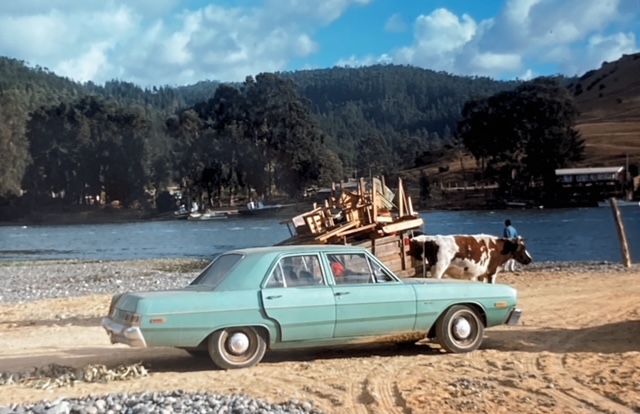
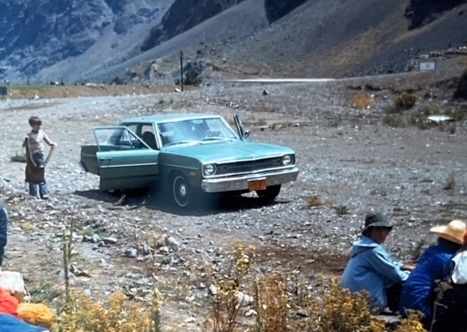
Our intrepid Dodge Dart on the way to the Altiplano
The American family began their journey on a road not marked on any map that passed from Chile into Bolivia, a road through the fabled Altiplano, a desert plateau so high that the altitude made gringos sick, a road their Illustrious Mother had learned about from the circus master.
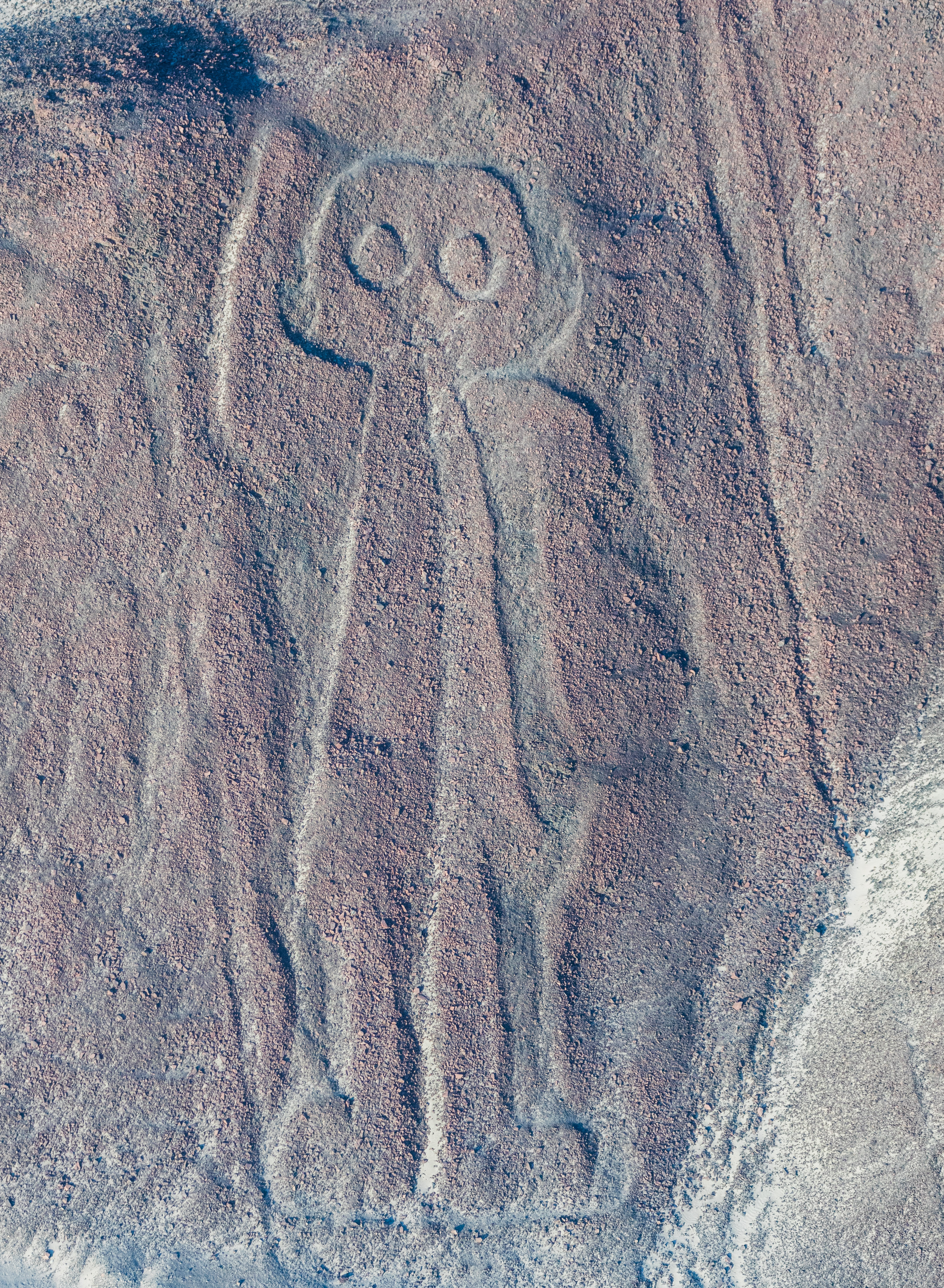
Strange goings on had been reported there. The ancient Nasca people had carved mile long spiders, monkeys, and airplanes into the plain. No one knew how they could plan and execute such drawings from the ground, nor why. Some preferred to believe aliens had visited them rather than that they were so advanced, while others speculated that they had ridden the thermals in giant fiber kites, using the pictures as maps of their territories.
Nasca Lines in Peru
Just wait, children. You’ll see. We are going to a magical place where the ground is so high it touches the sky. The air is thinner there, so I will be able to demonstrate to you the greatest mystery man has ever achieved. It will change you forever.
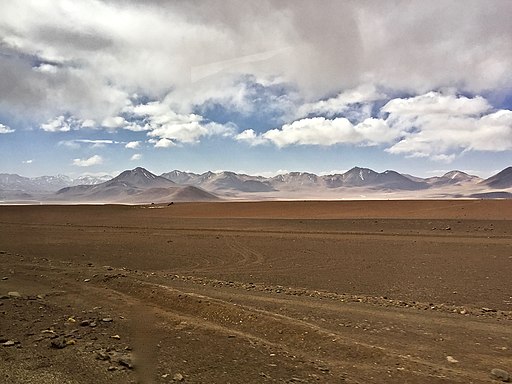
The altiplano (high plains in the Andes)
The children were eager to learn the mystery their mother would impart and eager to go home. The family drove north and stopped at all the military checkpoints above Santiago, but once they drove off the map, there were no boundaries or checkpoints to tell them when they passed from one country into another. That was how they forgot to say goodbye to their beloved country, never knowing how they would miss it until they got all the way home.
As they climbed the mountains, the landscape shed its vegetation until only a few low shrubs crouched near the ground. Higher still, the ground produced nothing but stones. The air thinned and the tightness in their lungs engendered a certain queasiness of stomach and dryness of mouth. As the road deteriorated, it churned up boulders and spat out streams. All at once, the road leveled out, and they found themselves at the edge of an expansive, sandy plateau rimmed by perfectly conical volcanoes. The road before them dissolved into two sets of deep tire tracks in the sand. Walter turned off the engine and the wind sucked up its rumble. All five of them looked blankly through the front windshield at the greatest expanse of nothingness they had ever seen. The sky was gray and the sun cold as gruel. The colors of the desert might have been named vagueness or loss.
The Intrepid Explorers, facing a vast nothingness, resolved not to turn back. Instead, they launched the car onto the sand at top speed. Within a few feet, the car stopped, blocked by the mound between the tracks, and the wheels spun uselessly.
Their brilliant mother and handsome father placed stones behind the wheels and got back in the car. Their father gunned the engine. The wheels spat out the rocks, the car lurched forward ten feet and stopped, blocked by the sandy center again.
Father and young god Ovid got out to push. Mother flipped her legs over the hump and wiggled into the driver’s seat. The car lurched forward twenty feet and stuck again. They continued working their way forward a hundred feet or so in this manner, before Mother finally shut off the engine. Silence rushed in, followed by wind. Now they couldn’t go back even if they wanted to, and they couldn’t go forward either.
Walter came around to the driver’s side. “What should we do?”
Something will come to us, she replied.
“I’ll walk to those hills. There might be a village,” Walter said pointing to low brown hills to the left of the volcanos. “I’m sure it’s only a few miles.” He kissed Mother on the cheek.
They watched him walk away. Vastness diminished his movement, and distance erased his height, until at last, he was only a tiny blue dash against the gray, barely discernible, blinking up and down, his movement indistinguishable from imagination.
As soon as darkness fell, the desert cooled. Mother got out of the car to set up the camp stove. The wind kept blowing the flame out, and her thin body wasn’t up to the task of shielding the flame, so the children locked arms around the stove while she lit it. They heated up some coca leaf tea, which was supposed to cure altitude sickness. Inside, Mother spread sleeping bags all around, filling the car with the downy scent of wet dogs. They sat in silence while the wind rocked the car like a cradle. Mother pulled out Plato’s “Allegory of the Cave” to pass the time and teach them the truth beyond shadows. Brilliant Ovid leaned forward and listened with his whole body, interrupting her excitedly now and then to discuss an idea, but the words lulled Fallon and little Terence to sleep.
My brother, my mother and me, camping along the coast in Chile.
The wind outside rushed over the massive plain, diminishing their tiny car, whispering indecipherably into their ears, and eventually everyone dozed.
Oh look! Mother cried in the darkness. The children sat up, the air in the car warm with down and farts, tiny feathers sticking to their hair.
“What is it?” Ovid asked.
The mystery. Oh, children, the mystery!
She wiped their condensed breath off the windshield and pointed out into the absolute darkness of the desert. At first the children saw nothing. Then, far off, a bright orb or light appeared and moved horizontally in a perfectly straight line, then disappeared. The other children gasped. “What is it?
Another light appeared above and dropped straight down.
“It must be Dad,” Terrence said. “Coming toward us with a light.”
No, no. It’s much too high and too large.
“And anyway, that’s north. Dad went off to the west, idiot,” said Ovid.
“What’s over there?” asked Fallon, trying to remember.
Nothing. Nothing but volcanoes.
“Could it be a truck driving down the volcanoes?” asked Fallon.
“No, the road would be going diagonally,” Ovid said.
Further to the right, another light moved from east to west, again in a straight line.
“Helicopters?” said Fallon.
“Why would helicopters be flying out here at night?” said Terence.
There have been reports of spaceships, Mother said. I have marked the spot they appeared on the windshield, my dears. We’ll check in the morning. Perhaps we’ve forgotten what was there.
They watched the lights in silence and drifted back to sleep.
Later, the cabin light speared a hole the darkness, and frigid air blasted in. The slam of the car door returned them to darkness. Walter was back, teeth chattering. His hands were too cold to close around the cup of tea Mother poured from the thermos. She piled a sleeping bag around him, and they whispered. It had taken him hours to reach the hills. There had been a village, but no one owned a truck. Large trucks came through daily. They would have to wait.
Mother told him about the lights: had he seen them? He had, but he didn’t know what they were. There was no village in that direction.
They never did find out what the lights were. That mystery was eclipsed by the much greater one that occurred the very next day.
Processing…
Success! You're on the list.
Whoops! There was an error and we couldn't process your subscription. Please reload the page and try again.
My parents were adventurers. In my lifetime, the only time they truly got along was when traveling. They lived in separate houses 400 miles apart, but remained married, and traveled together a lot.
Crouching behind the suitcase to get out of the wind.
The way we camped was to pack the trunk of the car with sleeping bags, a stove, a tent, water, gasoline, and a box of food, then drive–only backroads– highways were for tourists, not adventurers. When it came time to sleep, they’d pick a spot that seemed safe and secluded to put our sleeping bags on the ground if there was no rain, tents if there were. I’m pretty sure we were trespassing in farmer’s fields much of the time, and that was mostly okay in the 50’s, 60’s and 70’s, as was sleeping on the side of the road.
Sometimes, people DID consider it trespassing, as when some shepherds in Turkey attacked us in the night and we had to make a getaway across a river, but that was before I was born.
My novel Blue Woman Burning (due out in December 2021), is partly autobiographical, and starts with one such trek from Santiago, Chile to Oneonta, New York, in a Dodge Dart sedan. 12,000 miles. Took us six weeks.
I’m thirteen, and washing the dishes with my older brother somewhere on the altiplano between Chile and Bolivia.
Processing…
Success! You're on the list.
Whoops! There was an error and we couldn't process your subscription. Please reload the page and try again.









 A Writing Life: Lâle Davidson