Processing…
Success! You're on the list.
Whoops! There was an error and we couldn't process your subscription. Please reload the page and try again.

With an emphasis on fabulism, magic realism, and genre bending
Who knew this medium could help you revise and memorize? First you have to find a poem that fits easily into 60 seconds. It can’t be much more than 20 lines, because you need to speak slowly if you want people to really absorb it. Normal speaking rate for public speaking is about 150 words a minute. For poetry, I’d go slower. You have to do so many takes that it forces you to learn the lines and to make better decisions about how to say them. Add a little music, flip the camera around to record something besides your face once in a while, and voila!
One special effect on Tiktok is devil eyes, which gave me the idea that I should use it to read my story “Lilith Confesses” from my book Strange Appetites, due out on Amazon in September, about the baby-strangling, demon-birthing first wife of Adam’s from Jewish mythology. At 340 words, it was way too long for Tiktok, which tops out at 60 seconds. Here’s the result. I like it better than the original.

If you’ve been writing for a while, you already know what flash fiction is, but if you’re somewhat new to writing, you may not have heard of this liberating form. Man, are you gonna love it! My students do!
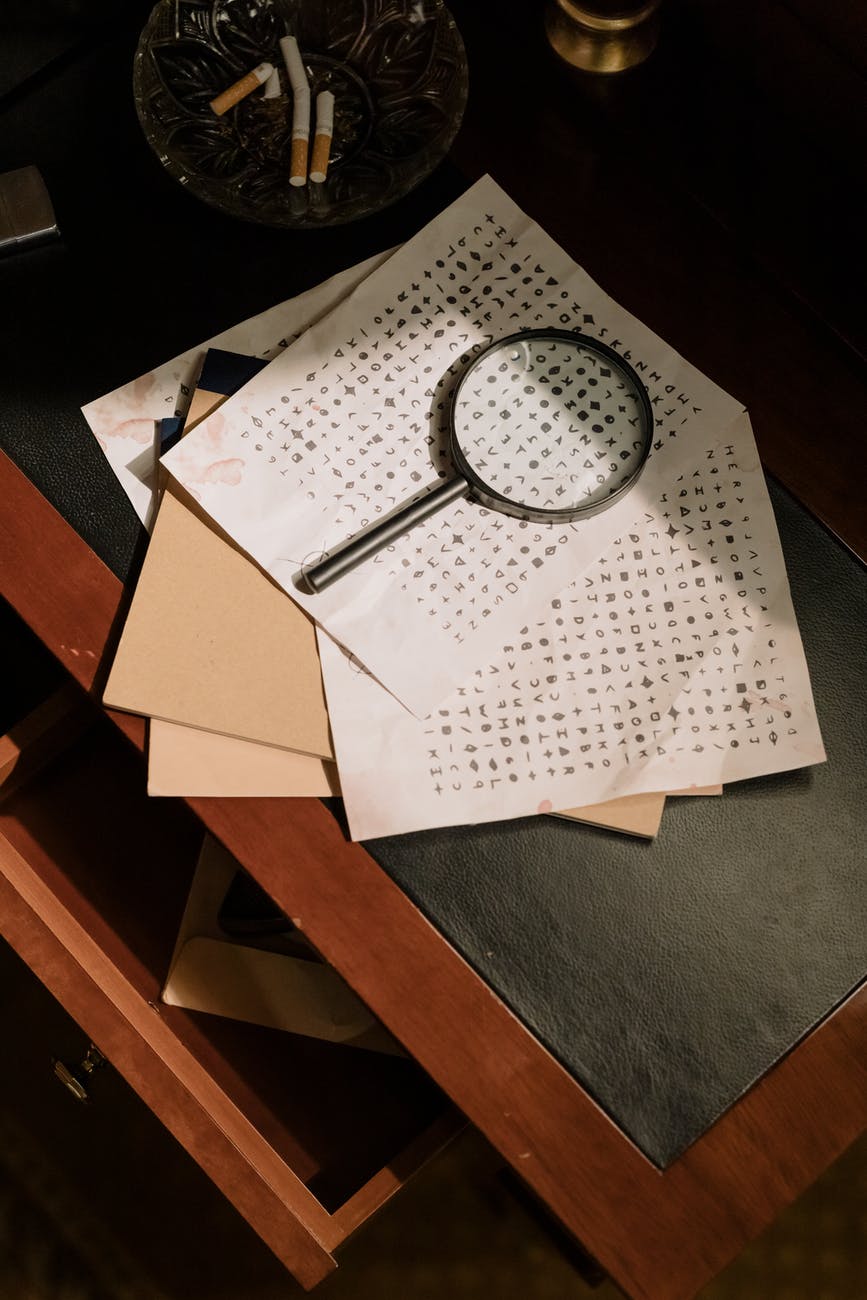
Flash fiction is very short fiction – between 50-750 words, and it goes by a few different names, micro-fiction and short-shorts. It embraces extreme compression and is a literary hybrid between a short story and poem. It tends to bend, explode and reinvent genres and most writing rules. As H.K Hummel and Stepnanie Lenox say in Short-Form Creative Writing: A Writer’s Guide and Anthology, it is “trangressive” by nature. Traditional story elements found in longer stories, such as complex character development and a series of reversals of fortune, don’t always apply to flash. Nevertheless, they have an internal logic that makes them tick, and when you miss that logic, they fall flat.
One of the reasons I love the form so much is that it forces you to put every word under the microscope to see if it’s really needed. A few years of writing and grading flash fiction has made me much more confident about editing longer works, including novels.
A great online journal to explore the form is Wigleaf (linked here). Every year, they pick fifty very short stories they consider the best of year (one of mine was picked in 2015).
Usually, the trick is to write about the last few seconds of an event, as Joanne Avallon does in “All This,” a copy of which can be found at this link, also anthologized in the text above, published by Bloomsbury. This story provides us with the anatomy of a moment’s revelation when a woman’s three-year-old bites her and she slaps the child. Between the hand drawing back and the hand hitting the child, so much happens, and yet the whole thing is only 244 words — less than a page.
The most common mistake students make when attempting flash is to try to cram too much into the short form, resulting in bland summary. Nevertheless, it can be done if you use the fable form, as we see in the story “Row” by Charmaine Wilkerson, available here, about how a civilization responds to climate change. The story is only 100 words. The reason it works is that it uses third person plural, in which the people go from minor to major denial, and it uses just the right amount of concise detail: they “eat cactus and fried lizards” and they “tie their rowboats to the higher branches.”
Another exciting thing about the form is that experimentation appears to be inherent. Lydia Davis, who said she could never master the conventional short story form, found liberation in flash fiction. All those things you’ve written in which you can’t quite identify the problem — or don’t quite know how to turn into a short story– turn out to be great flash fiction. A great example of an experimental form is “Three Ways of Saying the Same Thing” by Leonora Desar. It is just what it says it is, three paragraphs, each with their own subtitle, that talk about states of non-being, but which also employ surrealism or fabulsm (also called magic realism), as we see from the first line: “One day my boss was talking to me and I just disappeared.”
So, I hope you enjoy this brief introduction and dip your toes in soon.
People used to tell me I was really a poet, not a fiction writer because I tended to focus more on wording than plot. I disagreed. For one thing, I was afraid of poetry and had always preferred to read stories. Years later, after much writing, reading, and teaching, I’ve learned a lot about plot and character development, and I’m no longer afraid of poetry either, as I explain in this Tiktok video.
I tend to like more accessible poets, but if they’re too accessible, they don’t reverberate- which is one of the best properties of poetry. “Reverberate” is my word for when you keep finding more layers of meaning as you go over it. I liken poetry to a riddle. It’s like playing scrabble or chess. You want it to give you something to unravel, but you don’t want to be totally left out in the cold.
It’s hard to teach poetry, because it’s so darn subjective, but I believe I’ve come up with some good general rules: It should be compressed, it should make leaps of association, it should shift in some way (for example, from inside to out, from past to present, from abstract to concrete), it should make meaningful use of line breaking, it should appeal concretely to the senses, and it should be original. The parameters are broad intentionally.
I have a fondness for Wallace Stevens, even though he can be pretty abstract. I’ve found that it’s easier to understand a poet if you read a lot of their poetry all together, because you start to be able to crack their code. Memorizing poetry is another way to to understand a poem, and it has the added benefit of being good for your brain and making you seem super erudite (not that we need to try, right?
I have a terrible memory, so it took me a while to memorize Wallace Steven’s “Final Soliloquy of the Interior Paramour.” Making a tiktok out of it was the clincher.
Summing up the meaning in a few sentences does it a disservice, so just take this as a conversation starter. The poem suggests our imagination is a powerful force, as powerful as that thing we call God. Yet sis poems “The Emperor of Ice Cream” and “Of Mere Being,” suggest he was an atheist, so poem seems to be suggesting that i wrapping ourselves in the beauty of poetry and the brilliance of a mind that puts itself to good use makes life worth living.
Sci-fi writer Ray Bradbury said he warms up for writing every morning by reading poetry first. You can tell by the poetic nature of his lines. Many writers write in more than one genre, but this isn’t well known because publishers think pigeonholing us makes us more marketable.
We don’t live to be marketable, and while I wouldn’t mind selling a few thousand copies of Strange Appetites, my book of short stories coming out in September and Blue Woman Burning, the novel coming out in December, I don’t write to be marketable, either. I write to be lifted by that candle Stevens talks about that lights the dark. I aim to blend a good plot with the best aspects of poetry. And my hope is that when you read my work, you too, are warmed by it and find that “being there together is enough.”
Kenneth Koch’s Rose Where Did You Get That Red is classic book of poetry invention exercises geared to fourth graders. He uses the structure and premise of existing poems as a template or recipe for a new poem. For example, the recipe you might extract from William Blake’s “Tyger” is: ask a magical creature how it was made and what makes it tick, and make each question describe an awe-inspiring aspect of the creature using metaphor. This recipe technique is a common writing prompt for adults, also.
Inspired by Koch and the “Where I’m From” poetry template broadly available online, I developed a template based on Yusef Komunyakaa’s poem “Facing It” which has resulted in some excellent student work in my college introduction to creative writing classes.
If you haven’t already, outlining some basic components of poetry reliably steers students in the right direction, especially those afraid of poetry.
Rough Poetry Rules
Poetry usually:
Good class discussions also occur when I ask students to extract their own recipes from published poems.
The Writing Prompt
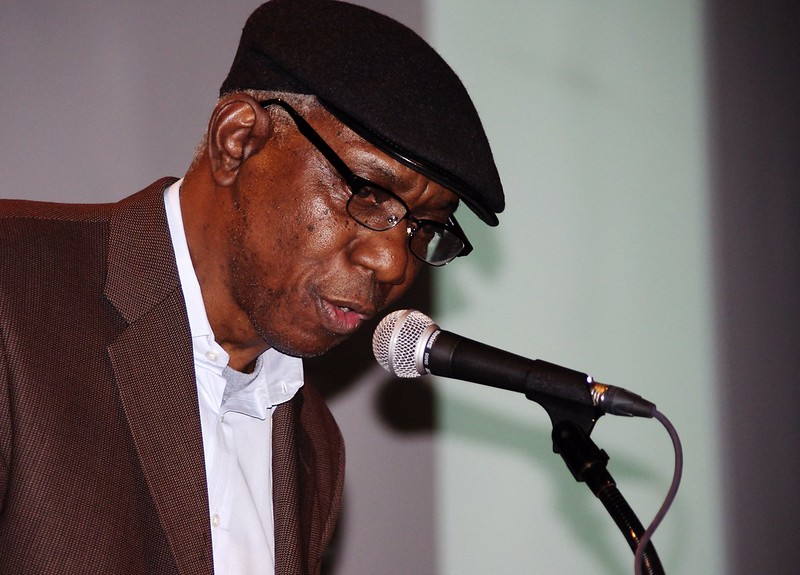
Preparation: Yusef Komunyakaa’s poem “Facing It” takes place in front of the black, reflective surface of the Vietnam Memorial in Washington D.C. Read the poem two or three times, each time asking students what images they remember ( as per Sheridan Blau’s literature workshop). Note how Komunyakaa uses reflective surfaces to shift from outside to inside the reflection, from flesh to image, from surface to depth, from past to present, and from illusion to reality.
Directions for students:
Compose a poem following these steps. Break the rules wherever inspired. The numbered directions loosely correspond to the lines of the poem. When confused, notice how Komunyakaa’s poem does it and substitute your own images/ideas. Continue reading “Facing It: Poetry Writing Prompt”

The way we see things is influenced by our mood. Setting detail can be used in a story to show character and highlight themes concretely, to “show instead of tell.” It’s also a way to make setting do double duty, which, Janet Burroway says in her many fine texts on writing, it is always good to do. Setting should never be mere decoration.
Often, in response to this prompt, students narrate the father and the mother’s thoughts as they look at the tree, or they create memories of the child. This isn’t a bad thing. After all, narrating people’s thoughts is one of many ways to show character, but the point of this prompt is to use concrete detail to create an image and to closely observe and then to chose diction that evokes a mood.
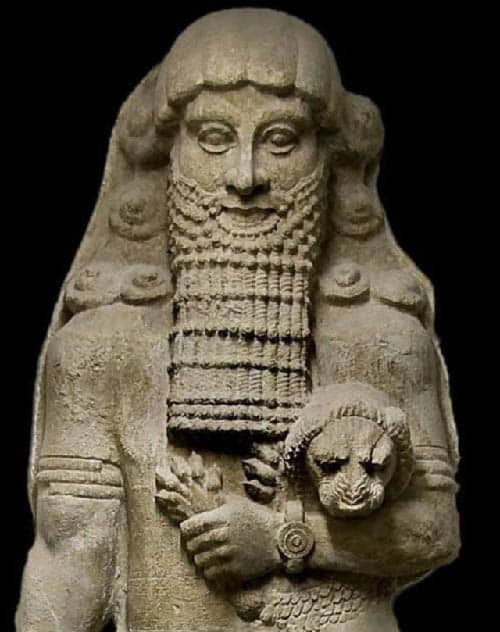
 The first form of fiction was, arguably, fantasy, what with mythology going back to 4000BCE and the first written fiction, The Epic of Gilgamesh written circa 1200 BCE. Some of the first English fiction were also fantasy, such as Le Morte d’Arthur written c. 1470. Yet fantasy not still not considered “literary” merely because it’s fantasy.
Somewhere in the mid 1800’s, realism took over the halls of academe, and anything which took part in the fantastical was deemed “less than.” This might have been the logical extension of the “age of reason” or the “enlightenment” where science began to supplant religion. Fantasy was kicked to the corner and designated as children’s literature or inferior “genre-fiction” (as if realism itself wasn’t a genre – but the true natural state of literary fiction). Despite this, fantasy and science fiction’s popularity persisted.
Eventually, in the 1960s, the academy begrudgingly allowed some science fiction to be taught, but almost exclusively from male writers, and fantasy was still disdained. While many science fiction and some sci-fi fantasy anthologies are published by textbook publishers, no fantasy anthologies are.
A few years ago, I was attending a session on teaching creative writing at AWP (the Associated Writers and Writing Program conference – one of the largest of its kind in the US). Teachers were saying they routinely forbid their students from writing “genre fiction.” They bewailed the fact that student writers of science fiction and fantasy wanted to spend a lot of time on “world building,” as if this was somehow an inferior pursuit to character building, which is one of the core criteria of literary fiction.
My contention that what makes fiction good or bad literature has nothing to do with genre (including regionalism, romance, westerns, as well as science fiction and fantasy). It has nothing to do with whether or not life is portrayed as “real” or “fantastical.” After all, the tension between what is real and what is unreal is inherent in “real life.” Some good fantastical literature can be recognized by how well it employs that inherent tension, such as the work of Karen Russell an Aimee Bender. I allow my students to write whatever they want to write, and I encourage experimentation, but inevitably, the question arises, what is good literature and how do we steer our students toward it?
I contend that we call a text literary when it meets many, but not necessarily all, of the criteria below:
This doesn’t mean that all literary fiction need be dense. There’s beauty in a great plot.
But this is not something you should ever think about when writing a rough draft. Save these thoughts for the end of the writing process.
I do not condemn that which some consider mainstream or genre fiction. Having written a few novels, I applaud anyone who makes it to the end with something resembling coherence. It’s hard work. Also, a lot of people don’t like what we, in academe, call “good literature.” It’s often dense, plodding, demanding, esoteric, and downright boring.
All kinds of writing is needed in the world, and each have their place. Some of my students are absolutely besotted by their fantasy, romance, and horror fiction, writing many novels. I would never want to squash that enthusiasm.
Here are some links to what others have said about this:
https://www.novel-writing-help.com/literary-fiction.html
 A Writing Life: Lâle Davidson