With an emphasis on fabulism, magic realism, and genre bending
Author: laledavidson
My novel Blue Woman Burning was published by Emperor Books, an imprint of Red Penguin Books, in the fall of 2021: "In the cold descending breeze of the Altiplano between Chile and Bolivia, Fallon’s narcissistic mother bursts into flames before her family’s eyes. The inexplicable nature of their loss marks each family member in a different way."
Against the Grain, my latest novel, will be released on Earth Day 2022: “Against the Grain combines gorgeous poetry and romance with heart-stopping action, as the daughter of a rich CEO joins forces with a logger’s son to stop a huge lumber company from destroying an ancient redwood forest. The trees themselves become surprisingly powerful characters in this rich, multilayered novel. After reading Against the Grain, you’ll never look at a tree in the same way again,” says Matt Witten, bestselling author of The Necklace.
My book of short stories, Strange Appetites, won the Adirondack Center for Writing People's Choice Award.
I love all that is absurd, odd, and beautiful.
When one of my best friends got an agent who sold her novel, I asked her if she’d recommend my writing. The agent asked her to characterize my work and she called it “quirky.” At the time, I took it as a put down. But as time went on, however, I noticed more and more book jackets describing the content of their books as quirky. When you Google search quirky books, here’s a small sampling of what comes up: Douglas Adams’ The Hitchkiker’s Guide to the Galaxy, Kurt Vonnegut’s Slaughterhouse Five and more recently, Yann Martel’s Life of Pi, Neil Gaiman’s The Graveyard Book, and Karen Russel’s Swamplandia! Quirky has become a literary subgenre. Google shows that the use of the word skyrocketed around 2010. A quick Amazon.com search of books with the word “quirky” in the title delivers more than 900 results. Some bookstores even have a Quirky Reads shelf. The term seems metamorphosed from bad to good.
So what exactly does it mean when applied to literature?
My oldest friend from 4th grade says I am decidedly unusual. I suppose I’m unusually honest. I’ve never understood why people hide their hurts, fears and flaws. We all have them. All people deep down are full of oddities, quirks, and unexpected turns. Maybe what quirky really means is authentic. Instead of putting up a conventional façade, quirky lit celebrates how people really are. Maybe that’s why its popularity is growing. In a world where big businesses homogenize and mass-produce everything, where commercials scream attention to glossy surfaces, people are getting hungry for the beautifully, wonderfully, strangely deep down.
Tilly sucking kitten formula from a paintbrush my daughter holds.
I was cleaning out a closet in our summer cabin at the end of a dirt road, pulling aside boxes and vacuuming up mouse turds, when I looked at the shelf below and saw a baby mouse clinging to a white plastic bag.
Every year we have put out poison for them when we leave for the winter, regretting their death by dehydration, but finding the alternative infestations of our clothing, mattresses, towels and pantry unsustainable. Last year, on the advice of a friend, we bagged all our cloth items and left bags of mothballs here and there. No poison. This worked better than poison, which may have been luring them in just to kill them. Usually the place was overrun with mouse turds, now there were only few.
I must have shaken this baby out of a cloth, but I couldn’t find the nest or its siblings. It had fur, but its eyes were still sealed shut. My guess is that it was about a week old.
I had a debt to pay for all that poison, so I showed the baby to my 14-year-old daughter, knowing she would melt and want to keep it. Bucky Goldstein’s Deer Mouse Ranch website gave detailed information on how to care for orphaned mice. It’s a dicey proposition at best. And if we succeeded, we’d have two cats, a dog and a deer mouse.
Usually, I leave injured or baby animals where they are, figuring nature’s plan is better than anything I could cook up.
But I rationalized that it would be a good time for a life lesson. My daughter Tess was about to enter high school and was looking forward to meeting boys. Nursing a baby mouse would act as a form of birth control.
The mouse’s head was no bigger than a child’s fingernail. Out in the country after most stores were closed, we had to settle for nursing her with very expensive infant soy formula purchased at the gas station mini-mart. Cows milk can kill them. The website said to feed the baby every two hours with a syringe or a fine-point paintbrush. You have to warm the formula in a bowl of hot water, hold the wiggly baby firmly but not so firmly as to crush it, then introduce the paintbrush into its mouth without getting it up its nose; respiratory infections can be fatal. After you feed it, you have to stroke its belly to stimulate digestion and probe its little anus with an ear swab to stimulate bowel movements. Then you have to keep it in an aquarium at an even 80 degrees. We had one of those back in our city house from our last adventure with gerbils, but for now, she stayed put in a little basket of fluff. We named her Tilly, after Matilda, a voracious mouse orphan on the website videos. Matilda means warrior maiden.
Our Tilly was a much fussier eater than her namesake. She squirmed, clamped her mouth shut, raised her head and refused the baby formula. It was astonishing how difficult it was to hold this baby that was no bigger than a child’s thumb.
By morning, Tilly had shrunk some and her tail looked segmented, a sign of dehydration, according to Bucky’s website. Back in civilization, I rushed out at 6 a.m. to buy Pedialyte, something you give your children when they are dehydrated from diarrhea. Tilly took it! Her little body knew what it needed and overcame the alien lemony taste. She grasped the brush with her tiny hands and sucked the bristles halfway down her throat. As soon as the pet store opened, I rushed out to buy raw goat’s milk and kitten formula, then went home to mix and warm them for the next feeding. She ate the formula, too. Dehydration abated, she began to move around more energetically, no longer staying in the tiny basket I’d placed her in. Her hairless belly skin was almost transparent so you could see her stomach fill with milk, and later you could see the dark waste in her intestines.
She grew stronger for a few days, and began to crawl around the cage every two hours when it was time to eat. My daughter, Tess, doing most of the feedings, was better at it than I was. Tess herself had been a fussy eater in her infanthood. She was a tiny baby and had trouble latching on, and when she finally learned, she developed colic. After much stress, engorged breasts and much handwringing and baby fretting we discovered she couldn’t digest cow’s milk, which goes directly into breast milk.
At six months, Tess was a weepy, wiggly, energetic and easily frustrated child, so I admired how calmly, firmly, yet gently this graceful 14-year-old grasped the mouse and, with a look of concentration, plunked the brush into Tilly’s mouth. If Tilly squirmed too much, Tess would put her down, take a deep breath and pick her back up again with a more confident grasp. I stood at the ready with a chopstick, adding one drop of milk at a time to the brush so that we didn’t have to struggle with getting Tilly to latch again. Tilly sometimes fell asleep nursing, and Tess had to prod her gently to wake her up to eat. Sometimes Tilly would bite down on the brush and hold on with her baby teeth, and Tess would have to stroke her tummy until she let go. Her body knew clearly what it wanted and what it didn’t want as its needs changed, now formula, now Pedialyte, now formula.
When Tilly was done eating, she’d curl in a ball in the palm of our hands, her full belly nearly as big as her head, and sleep, making the tiny clicking sound that Bucky’s website informed us is the equivalent of mouse purring.
Tess did the first half of the night feedings, then I gave Tess a six hour spell to sleep while I took over 1 a.m. and 3 a.m. feedings. Tess and I were both exhausted by day three. I remembered sitting up at night nursing Tess, scribbling crookedly in a journal balanced precariously on my knee, delirious with exhaustion, panic, love, and grief over my own lost independence. It’s an obsessive state of mind where you’re acutely aware that a fragile being’s life is depends on you. No matter where you are or how much you need a break, all you can think about is, what time is it? Where’s the baby. Is she okay? How had I kept it up for a year and a half?
Now it was taking the energy of two huge human beings to keep this tiny mouse alive, and all the while, we knew that a mouse mother could do a much better job with much less energy. Was this the lesson we were to learn, that when you go against nature’s order the input and output of energy is completely out of whack?
Somewhere along the five-day journey, Tilly began to weaken and become fussier and more resistant to eating. She began to fall over more when she tried to walk.
The last night, I spent an hour at each feeding trying Pedialyte, and different concentrations of formula and goat’s milk, but I could only get Tilly’s belly about half full. At the 3 a.m. feeding, I went to bed, knowing my daughter would probably sleep through the 5 a.m. alarm. I decided it was okay. I was pretty sure Tilly was dying. At 7 a.m., Tilly barely stirred when I picked her up, but she started clicking as she curled in the palm of my hand.
I woke Tess gently and told her I thought Tilly was dying, but that she was happy right now in my hand, and that I thought we shouldn’t bother her any more. Tess wouldn’t hear of giving up. She sat down and plied the brush, and at first it seemed to be working, but halfway through the feeding, Tilly died.
What was the lesson? Maybe we didn’t keep the cage warm enough (I had a thermometer and a light bulb shining down on it, but the temperature varied between 77 and 83 degrees. Maybe the formula wasn’t quite right. Maybe we let her get too dehydrated and she got organ damage. Maybe the mother had ingested some of the mouse poison we used to put out the year before (I still find caches of it here and there). Or maybe Tilly was just a number in the normal infant mortality rate for mice. Trees put out thousands of seeds to grow a few trees, frogs lay thousands of eggs. It is just nature’s way.
Maybe the lesson was that if I find another orphaned mouse, I’ll leave the room for an hour and wait to see if the mother is in the process of evacuating the litter and is coming back for it. We certainly won’t put poison out in the cabin again.
But what will I do if the house in the city becomes infested with mice, as has happened once before? Would it be less cruel to let my cats take care of the problem? I don’t think so. Perhaps I will put out mousetraps that snap their little necks quickly instead of causing them to die slowly of dehydration from poison. I’ve heard it’s just as cruel to catch them in a “Have a Heart” trap and put them out far enough away that they won’t return, because they usually starve or freeze to death. Whatever I choose, it will be another in a series of contradictory drives we call life.
I don’t know what it all adds up to, all I know is, for a few days, we lived very closely with a tiny beautiful being, saw her organs working under her transparent skin, heard her click-purring in our ears, and felt her tiny feet and hands press against our finger tips.
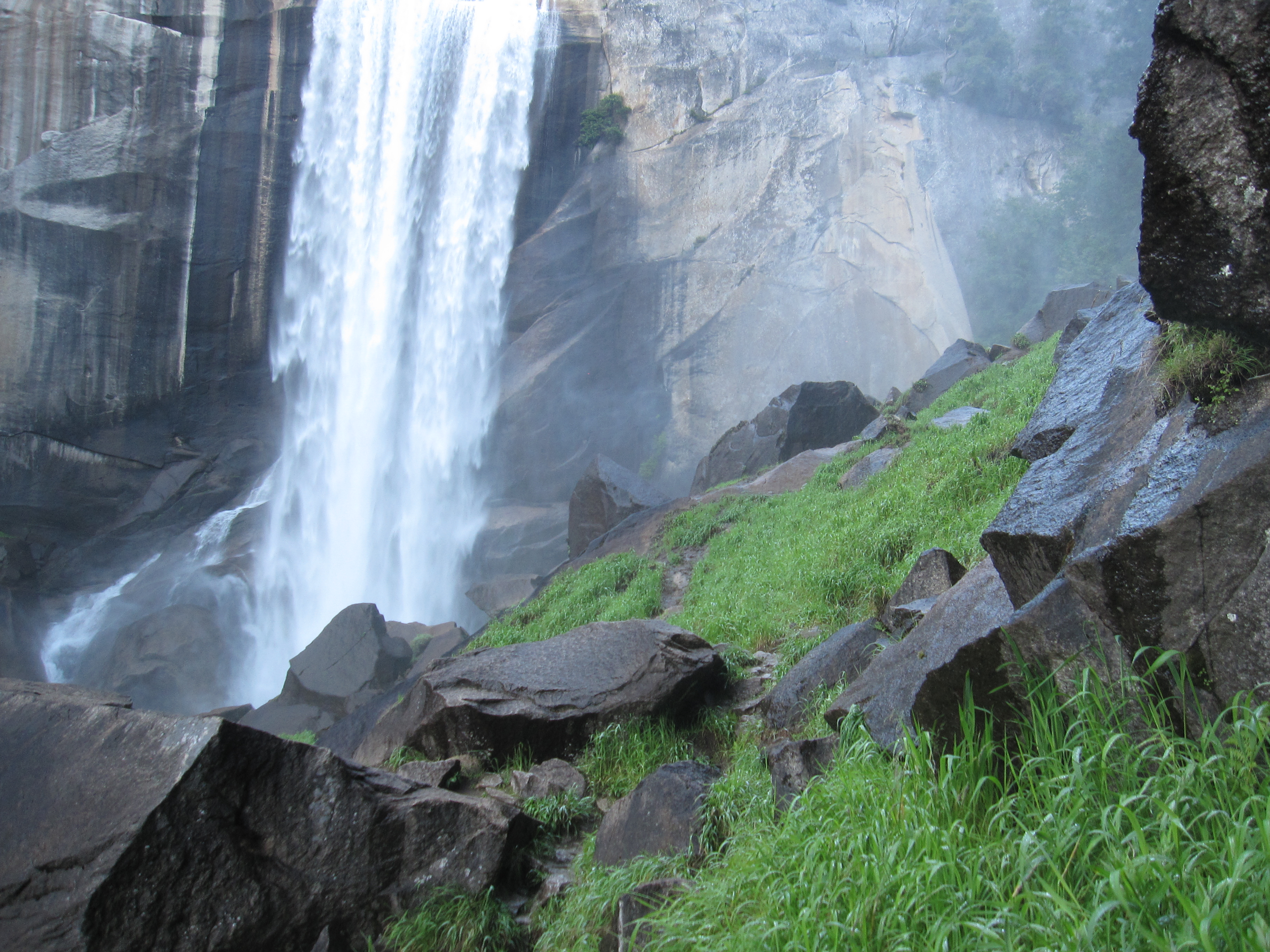
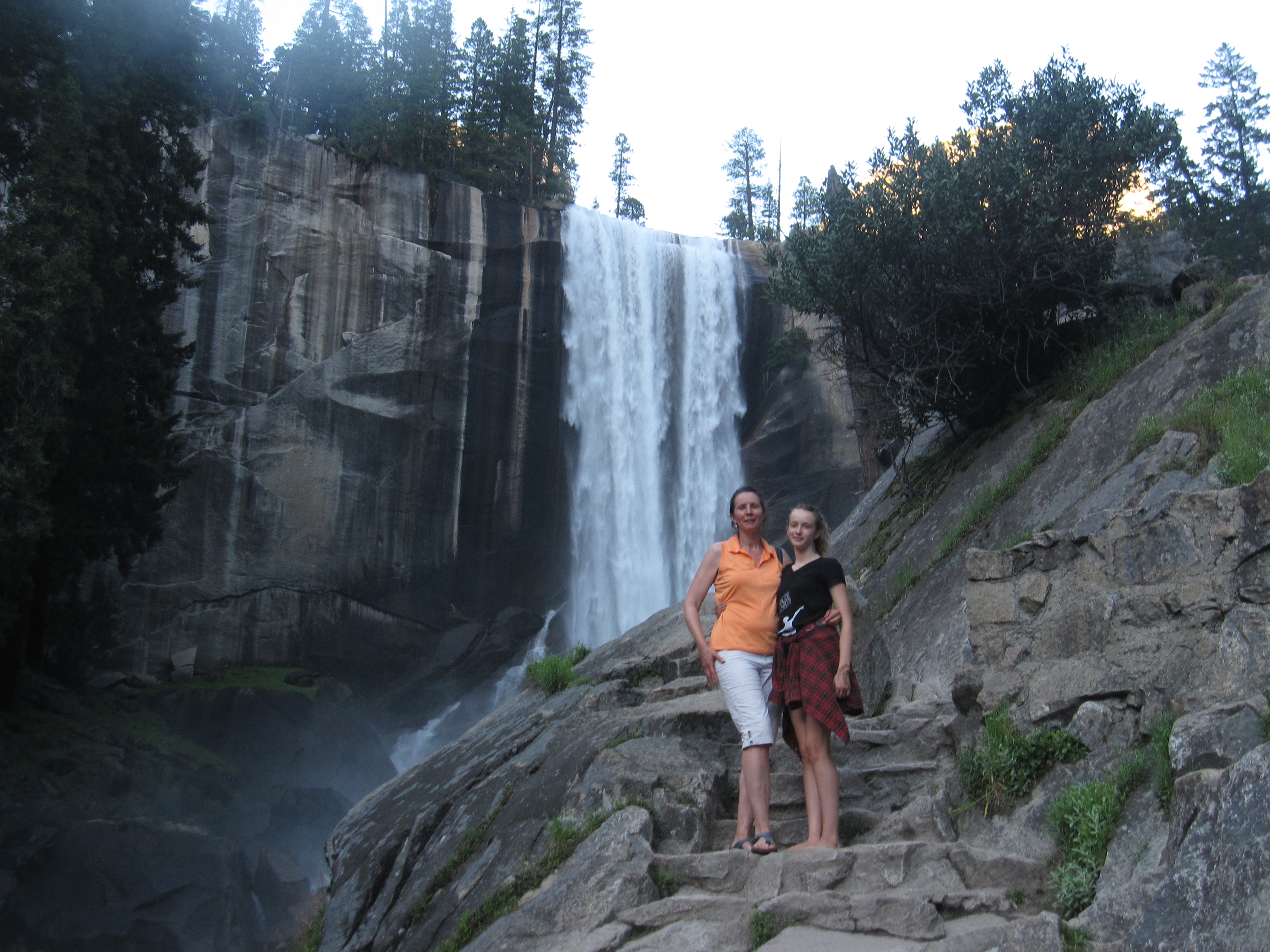
Vernal Fall, Yosemite National Park. This fall has steps. Wedding Veil, which I’m talking about below, doesn’t but is a thinner trickle.My husband, Charley Brown, mugging for the shot.
When you get into the crevasse of a mountain’s waterfall, there seems to be some kind of reverse gravity that sucks you up into its breast. I was reminded of this recently as my daughter and I scrambled over boulders up the tiers of the Wedding Veil waterfall in Yosemite National Park, California last month. You have to place your hands and feet carefully on the rocks and leverage your weight as you climb up into one pool, then in the one above. You strategize the best path to take, lest you climb into a spot you can’t get down from, and with each step and hand hold, the view changes and new plans have to be made at a moment’s notice. The activity is mesmerizing, fatigue falls away, and you climb faster than you should, driven to get up to the top by physical magnetism.
It’s a lot like finishing the definitive rewrite of a novel, which I did recently. As you get closer to the end, the drive to finish overtakes you, even as the fear of finishing fights you, and you find yourself spending all day, writing, writing, writing. Of course I’m not finished, finished. Still have to ask my writing group and other friends to read and give feedback, still have to tinker with sentences here and there, and proofread several times for errors. But the big work is done. Feels good and a little scary. Unlike climbing to the base of a waterfall, where you sit and bask in the mist and power of falling water, you get to the end of a novel and feel a little lost, as in, what now?
I’m pleased to announce two recent publications: a darkly humorous story, “Life in the Margins” at Big Lucks, and an essay, “How Not to Become a Writer” at Talking Writing. The latter was written in tribute to Lorrie Moore’s “How to Become a Writer,” and was a finalist for the humorous writing advice contest hosted by TW. Please visit these sites, leave comments and browse other excellent content.
I very much enjoyed working with my editor at Big Lucks, An Tran, who gave an excellent critique and good reasons for the critique. Working together, I believe we improved the story. Below are his answers to my questions about the magazine.
Your “about” page says that Big Lucks wants to be like a “nuclear submarine” that helps literary lifeforms that lurk in “the unlit depths of the ocean…breach the repetitive ebb-and-tide…” of, one assumes, the literary surface. What does that mean to you?
Submarines are fascinating in that they are, more or less, wholly self-sufficient communities submerged in the sea. We don’t think about them much, but they are there. And, in isolation, communities develop their own unique cultures. We want to bring up what is often overlooked; we want to take chances and give voice to those that don’t fit into more traditional stylistics found in literature today.
John Campbell, the editor of Astounding Science Fiction was famed for shaping an entire school of science fiction by sounding a call for a particular aesthetic and then selecting those who adhered to his ideas. Other editors try to keep their finger on the pulse of the literary zeitgeist of the times and select works to represent it. Most editors today will say they just pick what moves them and don’t adhere to any particular aesthetic. Which role more closely describes your approach to editing Big Lucks?
Our one rubric is: does this excite us? We aren’t looking for a specific aesthetic; we don’t want to be boxed in that way. If a piece is experimental or avant-garde, great! If it’s traditional, great! What matters is if it’s well-crafted, emotionally resonant, and reveals something about ‘truth’ that we hadn’t considered before, or presents itself in a way we haven’t seen before.
Our editors all have unique tastes and personal biases; one of us might bring something to the group that we’re really excited about, but something falls short for the others. But when we all get really excited about a piece—no matter what style it comes in—we know it’s more than just good, because it transcends personal tastes or one individual’s stylistic preferences. When we agree on a piece, it’s magical, because we’re all excited and all on board.
We know that people do things in patterns even when they think they are not. Looking back on your past issues does the magazine have an aesthetic or a pattern that tends to show up either by unconscious or conscious design?
I think any patterns one might observe are more indicative of cultural shifts in literary aesthetic as a whole and less of any conscious or unconscious factors in the selection process. We choose works that resonate on many different layers, works that accurately reflect the rich complexity of being human and being alive in the early 21st century. If there is a cohesiveness to that resonance, it is because (we hope) there are experiences and modes of expression that speak to this time and this culture with greater relevance and intensity than do others.
In the early 20th century when modernism was budding, the world population was only 2 billion. There were literary stars who were generally recognized, like Gertrude Stein, Ernest Hemmingway and William Faulkner. As the world reaches a population of seven and a half billion, with more than 600,000 books being published a year, it gets harder to see the literary movements and stars of this era. Could you speak about the literary patterns or movements budding today in your neck of the woods? How is the literary world different today than it was in the twentieth century?
Prior to the 20th century, most literary artists were sharing their work in smaller communities, with the stylistics appreciated by the aristocracy being vastly different from the stylistics enjoyed by commoners. The 20th century of English literature was an outlier in human history, as far as the consumption of literature is concerned, and even still there were many many contemporary writers of the time that published, gained moderate popularity, and then faded into obscurity as time went on.
It is typically only fiction writers that have any ideas of ‘stardom’ through writing, so this kind of conversation can be alienating to poets, essayists, playwrights, screenwriters, etc. I think, more and more, writers are letting go of the idea of some kind of central celebrity or realm of prominence, are growing more happy with just having their work out there and consumed at any public scale. This is a good thing; it’s the way it was meant to be.
How has Big Lucks changed since its inception?
The masthead has definitely gone through some changes. The presentation too. We moved from a print journal to an online model and have gone through a number of different designs in order to facilitate a deeper reading experience. And we opened up Big Lucks Books to an incredible reception. In many ways, it’s all stayed the same: we are interested in bringing daring, innovative and powerful work to a wider public and we are pursuing all of the ways we can think to most effectively do this. But that central idea has certainly blossomed into something I don’t think Mark and Laura, who founded the journal, could’ve conceived of when it all began; certainly, I couldn’t have conceived of this when I was first brought on board.
How would you describe the relationship between Big Lucks and Big Lucks Books?
Big Lucks Books is the natural culmination of the journal’s original aim. Through it, we can bring incredible works that don’t fit in well with other publishers to a much wider audience. Poetry books, chapbooks of flash fiction, novellas and works like these are often produced as complete visions, but represent tremendous risk to traditional publishers. These works are often too long to be included in a journal and are considered too short to stand alone, but they are often works that must stand alone and something very valuable is lost if the work is padded to a greater length or reduced to a shorter one. We take amazing works of literature and make it public; that is what we do and who we are, whether we do this through the journal or through pressing books.
After her mother spontaneously combusted on the altiplano between Chile and Bolivia, Fallon turned her head, saw herself reflected, beautiful and male, in the face of her older brother Ovid and fell in love.
This is the opening line of my novel-in-progress The Ciphery, where the main character tries to figure out how a person can ever trust herself in a world where reality is a matter of perception and the improbable has already occurred. I hear the opening line to the tune of Pink Martini’s “Le Premier Bonheur Du Jour”.
In a former post, I said I would periodically post links to music from the playlist Ciphery theme music. Though I understand that many write while listening to music, I can’t actually do it for long, because hearing is my dominant mode of information processing, and my attention goes to anything audible first. However, music is a quick way to get back in touch with where one has left off, while it pleasantly promotes theme and tone continuity.
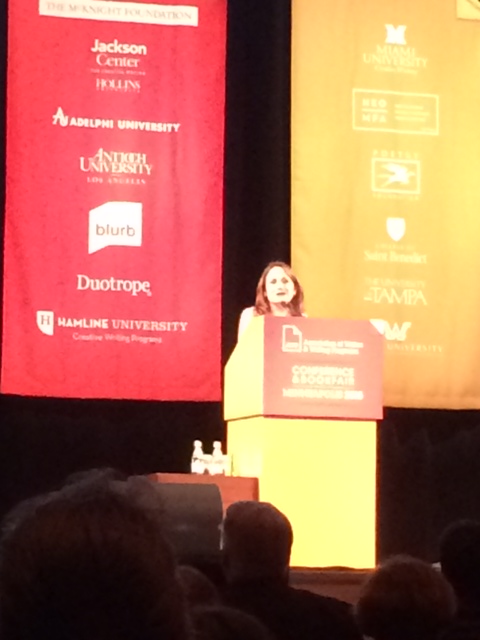
As I write this post, I’m at the Associated Writers and Writing Program Conference 2015 in Minneapolis, MN. Just listened to Karen Russell’s keynote address, “The Paradoxical Usefulness of Non-Utilitarian Motion AKA Play.” It was far too brilliant for me to absorb every word (especially after getting up at 3:30 to catch a plane to Minneapolis and listening to sessions all day), but the gist of it was that play – which by definition has no purpose and is done for its own sake– has a transcendent, revolutionary, and healing purpose. And that’s what we writers do.
She gave an example of how stroke victims heal more by trying to simulate the motions of a virtual dolphin than by repetitive goal-oriented movement. The seemingly random motions of a flailing baby wire our brains for language, and the air-bubble rings that dolphins make, for no other purpose than to have fun, distinguish them as having superior intelligence. She said play is the seedbed of all language and that it can’t be reduced to its effects, hence the paradox. We play to play, which makes us better writers. And, I might add, as soon as we play to get better at writing, we cease to play.
She said much more, but that’s all I’ve got for now. I’ll post a link to the written version, if she posts it.
I also attended a GREAT panel called, “Nerd Novels: Exploring Worlds of Knowledge in Fiction,” led by Peter Mountford, Jean Hegland, Michael Byers and Susan Gaines and another great session on the uncanny with Kelly Link, Steve Stern and Karen Russel, where I became aware of the magical realist oriented Small Beer Press, and I attended a session on why fairy tales continue to haunt us. More on all that in a future posts.
AWP was fab as always. The bookfair reminds you that the creativity thrives under the radar of “the market.”
Taking a leaf from my friend and fellow writer Barbara Chepaitis’ book, I have created a soundtrack for my novel The Ciphery. Because I work full time, I have to snatch and hour here and an hour there to write, so this soundtrack is wonderfully useful in getting me back into the head-space of the novel quickly. Plus, it’s fun to imagine the movie version of my novel. I will be sharing some of the links to the songs for my next few blog posts. They all inhabit that strange place between the real and the fantastic that we seem to inhabit unconsciously. These are all available for purchase on iTunes. Enjoy.
Okay….I wasn’t sure, because the e-mail announcement came with a rejection announcement at the same time. I guess those who live by magic realism get tortured by magic realism, but here it is in living print! Woo hoo! Maybe I’ll sell that novel after all. Working hard to be finished by August. http://thedoctortjeckleburgreview.com/announcing-the-2014-…/
“Empty Spaces” by Stephanie Frazee “Plato” by Daniel Grandbois “The Opal Maker” by Lale Davidson “The Hole” by Rebecca Nison “The Eye” by Amy Narneeloop “Dream State” by Mark Jacobs…
True confession here. I don’t believe in fairies (sorry Tinkerbell), I don’t really believe in ghosts (sorry Dad), and I think psychics are just very good intuitionists…so why do I love magic realism and fantasy? Why is this literature and movie genre thriving?
Here’s one of many reasons. We know from cognitive and brain science that we have several brains, the more primitive brain at the center – the brain stem and the neocortex. In the central brain stem resides the amygdala which governs our limbic system which governs our emotions (this is explained very well in Roseann Bane’s Around the Writer’s Block.
This part of the brain is geared toward survival. It reacts instantaneously to fuzzy perceptions. It knows only three reactions, fight, flight or freeze. It sees a snakelike object in the grass and prompts you to jump or shoot. You jump and THEN you take a closer look and your cerebral cortex says, “Oh, that’s not a snake. It’s a stick.” Evolutionarily, the cortex developed later and surrounds the primitive brain and is where you do all your rational, creative, sorting, organizing, and planning thinking.
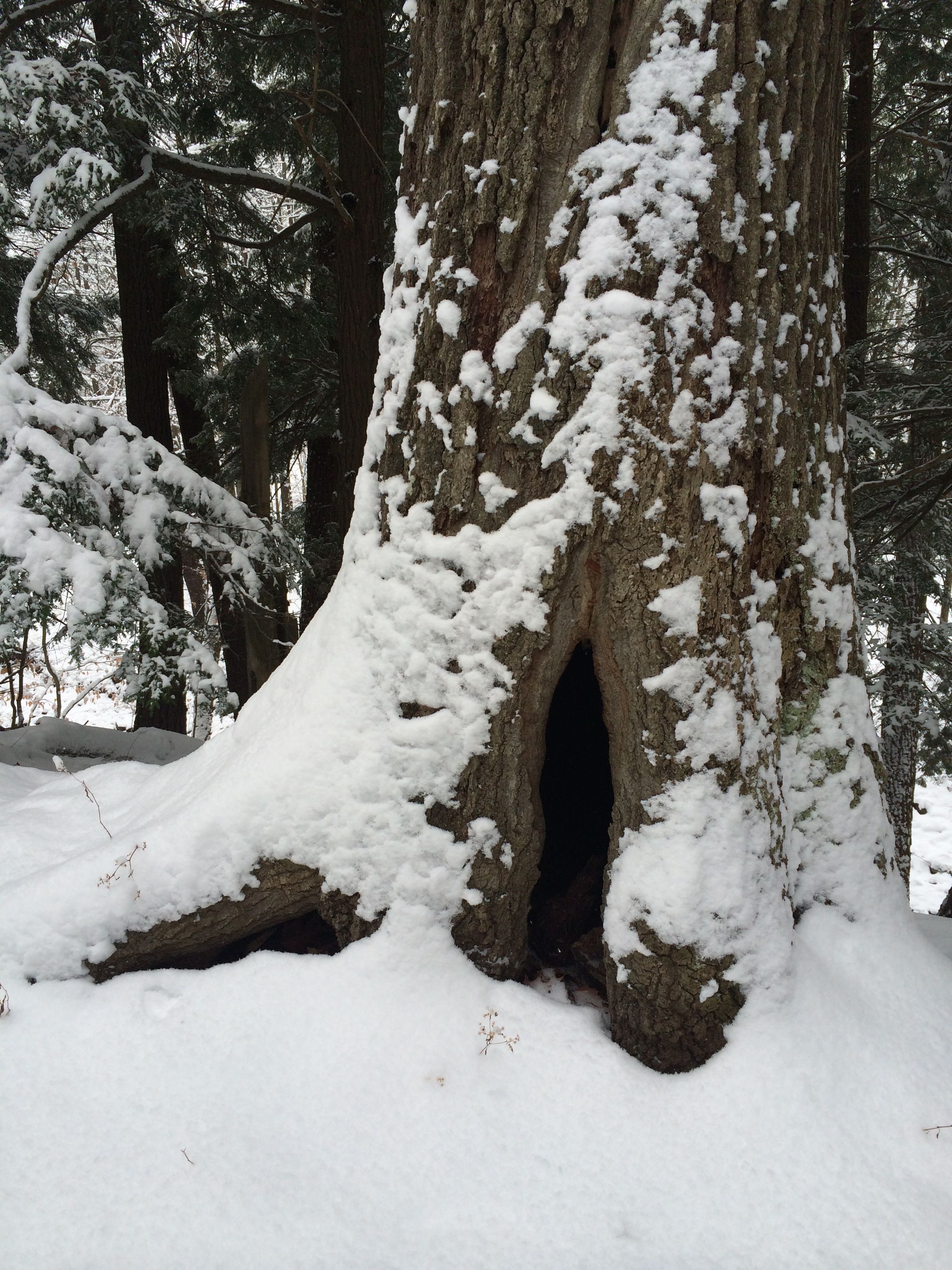
The point is, that part of our brain still sees the world in terms of magic – it sees ghosts in the flickers of peripheral vision, it sees zombies in that unexpected manikins you run into in the attic, it sees a weeping woman in the snow capped sign post in your low-beams at night, it provides the stories and images in your dreams for your thoughts, feelings and ideas.
Science fiction, fantasy, and magic realism also help us explore our deepest fears in safe ways. Bruno Bethlehem, in his book The Uses of Enchantment, famously asserted that the sanitizing of fairytales and folktales left children less equipped to handle the stress of life. Who knew, for example, that in Cinderella, the wicked sisters cut off their toes to fit their feet into the shoe?
Also, these genres feed our need for a spiritual connection to something greater than ourselves and to the inherent interconnectedness of all things.
Before I end, I ned to add a respectful disclaimer, in case I insulted all the ghost hunters and psychics out there. I don’t disbelieve in anything completely. I truly think anything is possible, but not exactly probable, so I look or the rational explanation first. I can’t tell you how many times I’ve heard sound bounce in unexpected ways to create the illusion of thumping up above when it’s really coming from next door.
I must also say that I see the possible danger of grandiosity, narcissism and avoidance when people start asserting they have special powers. However, to those friends of mine who make such assertions, I believe in radio waves, microwaves and other forms of communication that are undetectable to the human eye and ear, and I think you should keep honing your craft whatever it is, because above all, I believe in the inner wisdom of all things and the magic of the atom.
I woke up the other morning realizing that if I had entered myself in the race to become a great, Pulitzer Prize-winning novelist, I am certainly losing. Next thought (thanks to years of therapy and generic Cymbalta) was that I have never finished reading a Pulitzer Prize-winning novel (except 100 Years of Solitude). I appreciate their brilliance, the way they are stories about an entire culture as much as a single person, but they are always so slow and boggy. That’s not the kind of novel I want to write. I want my novel to move fast on the surface but provide undercurrents that people can ride should they choose to.
Besides, I’m not in the race. I’m just trying to live a full, rich, loving life. I’m a teacher who writes and a writer who teaches. The two enhance each other, and I don’t believe that old adage, “Those who can, do; those who can’t, teach.” Rather, those who can truly teach are a rare breed and do a great service to the world. I aspire to be one of those kinds of teachers.
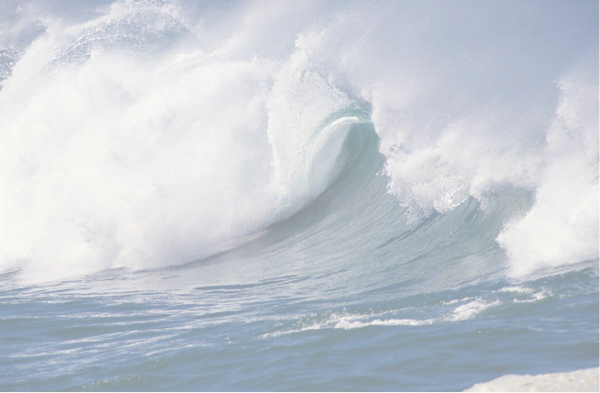
Writing a novel is hard and requires balance, yet movement. The surfing metaphor comes to mind. You have to overcome ego issues, you have to tune into the rest of the world, but you have to tune into yourself at the same time so that you can become an accurate conduit… and you have to maintain the balance between the abstract and the concrete, between words and sounds, between conscious and unconscious. You have to go into the past, but not get swallowed by it, know when to make things up, know when to borrow from reality. You ride the wave, exerting years of practice to maintain balance, but following where the wave leads.
It’s better than watching TV (I do too much of that, because it’s so much easier). Novel writing is a worthy puzzle to master. It enriches life and strengthens them mind no matter the outcome.
By the way, my essay, “How Not to Become a Writer” was a finalist in the writing advice contest of Talking Writing and will be published in their Spring 2015 issue, and my story “Life in the Margins” is forthcoming in Big Lucks. I had a great time working with their brilliant fiction editor, An Tran. I’ll post the links when they are in.







 A Writing Life: Lâle Davidson